Native Plants
Q. Who is Mr. Smarty Plants?
A: There are those who suspect Wildflower Center volunteers are the culpable and capable culprits. Yet, others think staff members play some, albeit small, role. You can torture us with your plant questions, but we will never reveal the Green Guru's secret identity.
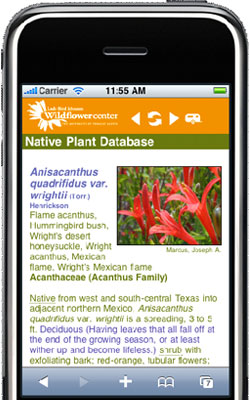
Did you know you can access the Native Plant Information Network with your web-enabled smartphone?

Ask Mr. Smarty Plants
Ask Mr. Smarty Plants is a free service provided by the staff and volunteers at the Lady Bird Johnson Wildflower Center.
rate this answer

Wednesday - March 27, 2013
From: Miami, FL
Region: Southeast
Topic: Groundcovers, Grasses or Grass-like
Title: Groundcovers for Miami FL
Answered by: Brigid & Larry Larson
QUESTION:
What is a ground cover that does not need mowing or a lot of water and survives in South Florida heat and is also native to the area? I would like to turn my lawn into a more natural self-sustaining area. Thank youANSWER:
Mr Smarty Plants offered a discussion of ground covers for southern Florida a while ago. These plants would also be good choices for you and they appear to be more lawn-like than the native plants I found from Miami-Dade county. Other excellent sources are the Florida Native Plant Society and Plant Real Florida. Plant Real Florida has a list of recommended plants set out by plant community for Miami-Dade County, this includes groundcovers. Similarly, the Florida Native Plant Society has a list of recommended plants for Dade County which can be divided into the different plant types.
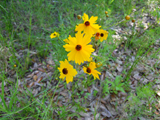
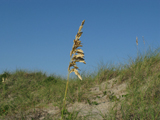
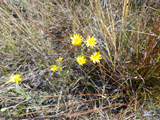
In looking for specific recommendations for you, Mr Smarty Plants checked to see if there were plants on both the Wildflower list and these Florida lists. Three grasses are on both the Native Plant Society recommendations and the Wildflower Center recommended list for South Florida. These are Spartina patens (Marsh-hay cord grass), Tripsacum dactyloides (Eastern gamagrass) and Uniola paniculata (Sea oats). All of these grasses are a bit high for standard lawn use, so you may prefer a groundcover. The Plant Real list has four groundcovers that are also on the Wildflower Centers list. These are Batis maritima (Seaside saltwort), Zamia pumila (Coontie), Coreopsis leavenworthii (Common tickseed), and Pityopsis graminifolia (Narrowleaf silkgrass).
This is a great set of options. You will still need to review these for the effect you want also also how the ones you select look and grow together, but hopefully from this and the many choices on those lists you can find a groundcover that will work for you.
From the Image Gallery
More Groundcovers Questions
Fast Growing Groundcovers for Long Island
March 18, 2016 - Can you please suggest a few fast growing groundcovers suitable for the south shore of Long Island? The area is fairly sunny and dry.
view the full question and answer
Ground cover for Central California from Concord CA
July 19, 2012 - I live in a part of California where the summers can be very hot and dry but quite cool and wet during the rainy seasons in the wintertime. The soil around my home is very dry, rocky and infertile. I...
view the full question and answer
Wildflowers for Murphy NC Clay
August 24, 2012 - I live on a ridge in Murphy NC. The property has trees so most of the land is in partial shade. The soil is good 'ole mountain red clay. I have some steep bankings in front of the house that I wou...
view the full question and answer
Parthenocissus quinquefolia as replacement for Asiatic jasmine
June 14, 2007 - The deer have stripped the Asiatic jasmine groundcover under my clusters of live oak trees in Southwest Austin. This year the bare areas of ground are covered in Virginia creeper seedlings. I have b...
view the full question and answer
Groundcover Suggestion for OK
April 24, 2015 - I need your suggestion for a groundcover for a flower bed in the sun and in the shade in Oklahoma.
view the full question and answer
| Support the Wildflower Center by Donating Online or Becoming a Member today. |