Native Plants

Q. Who is Mr. Smarty Plants?
A: There are those who suspect Wildflower Center volunteers are the culpable and capable culprits. Yet, others think staff members play some, albeit small, role. You can torture us with your plant questions, but we will never reveal the Green Guru's secret identity.

Did you know you can access the Native Plant Information Network with your web-enabled smartphone?

Ask Mr. Smarty Plants
Ask Mr. Smarty Plants is a free service provided by the staff and volunteers at the Lady Bird Johnson Wildflower Center.

rate this answer

Wednesday - June 06, 2012
From: Austin, TX
Region: Southwest
Topic: Diseases and Disorders, Pests, Herbs/Forbs
Title: Something eating holes in Texas Betony from Austin
Answered by: Barbara Medford
QUESTION:
What pest is eating holes in the leaves of my Texas Betonys? They look healthy but almost all leaves have various sizes of round holes in them. What is the best cure for this? ThanksANSWER:
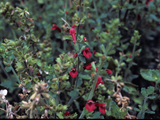
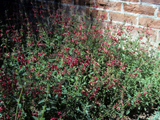
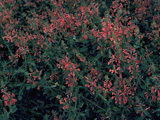
Stachys coccinea (Scarlet betony) - also Texas Betony, is one of those plants that most references regard as "pest free," or "few problems." Obviously, that is not the case with your plant. We did a little further searching with other members of the Stachys genus and discovered that some of them have problems with slugs, snails and whiteflies. For instance, here is a website on Stachys lanata (Woolly Betony) which is not native to North America but widely grown here. We doubt the pests check plants' passports before they start chewing.
If you scroll down that webpage, you will find a section on Problems - Pests: Slugs and Snails. Another reference mentioned whiteflies. Here is what the website on Wooly Betony had to say about the slugs and snails:
Prevention and control: Keep your garden as clean as possible, eliminating hiding places such as leaf debris, over-turned pots, and tarps. Groundcover in shady places and heavy mulches provide protection from the elements and can be favorite hiding places. In the spring, patrol for and destroy eggs (clusters of small translucent spheres) and adults during dusk and dawn. Set out beer traps from late spring through fall."
From University of California Integrated Pest Management: Snails and Slugs.
From the same source: Whiteflies
These both seem to involve a moist environment, so be sure you are not overwatering your Texas Betony and providing a welcoming environment for the pests. According to our webpage on Stachys coccinea (Scarlet betony), the plant likes moist soil and part shade, both good environment for the pests we are discussing.
From the Image Gallery
More Diseases and Disorders Questions
Various landscape problems in Omaha, NE.
June 18, 2015 - Thank you for your time, sorry i cant sort this out because my issue seems to fit many but also none of the issues I've read about. Some patches of grass in my lawn have yellow spots and dying and/or...
view the full question and answer
Spots on persimmon tree leaves from Dripping Springs TX
July 10, 2013 - We are in rural Hays County Texas off Hamilton Pool Rd Texas. Large persimmon trees are turning yellow, blackish spots on underside of leaves. What do we do?
view the full question and answer
Mexican oak and red oak not looking healthy
August 02, 2014 - I purchased a Mexican oak tree and I believe a red oak tree from your center about 1 year ago. Recently I've noticed that they don't look as healthy as they have been, and I just looked at the leave...
view the full question and answer
Lantana isn't blooming in Leander, TX.
August 03, 2011 - I bought a small potted New Gold Lantana about 2-1/2 weeks ago. I planted it in full sun and covered it with mulch.
The few original flowers have fallen off. Although, I see a couple of new buds, ...
view the full question and answer
Live oak with brown balls and brown spots in Round Rock PA
August 01, 2010 - Is my live oak sick? Brown spots are on the leaves and round brown balls are growing on the stems. Please help.
view the full question and answer
| Support the Wildflower Center by Donating Online or Becoming a Member today. |