Native Plants

Q. Who is Mr. Smarty Plants?
A: There are those who suspect Wildflower Center volunteers are the culpable and capable culprits. Yet, others think staff members play some, albeit small, role. You can torture us with your plant questions, but we will never reveal the Green Guru's secret identity.
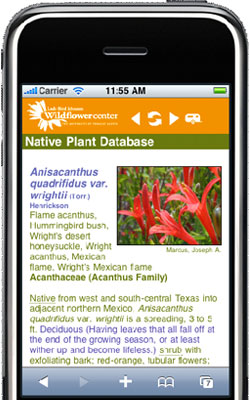
Did you know you can access the Native Plant Information Network with your web-enabled smartphone?

Ask Mr. Smarty Plants
Ask Mr. Smarty Plants is a free service provided by the staff and volunteers at the Lady Bird Johnson Wildflower Center.

rate this answer

Tuesday - July 04, 2006
From: Pensacola, FL
Region: Southeast
Topic: Non-Natives
Title: Conditions for non-native, poisonous mandrakes
Answered by: Nan Hampton
QUESTION:
What climates or conditions can mandrakes live in? Do they have to live submerged in water, with some water, or with very little? Why? ThanksANSWER:
All of the mandrakes are native to the Mediterranean region of Europe, Africa, and the Middle East. Since our focus and expertise at the Lady Bird Johnson Wildflower Center are in the native plants of North America, mandrakes aren't really in our purview; however, I can guide to some resources to answer your questions. Mandragora autumnalis, a European species, is recommended for rock gardens so they are obviously not obligated to live submerged in water. Mandragora officinarum should be grown in well-drained soil to prevent the roots from rotting. Please be aware that Mandragora species are considered poisonous. You can find more information about the mandrakes by searching the internet using their botanical names.More Non-Natives Questions
New house plant in pot in Chevy Chase MD
May 07, 2010 - Is it possible for one house plant to eventually die in the pot while a completely different plant grows in its place? The new plant looks similar to the potted plant next to it but it is not quite t...
view the full question and answer
Question about non-native blue potato tree
July 08, 2008 - I have a blue potato tree that I planted last summer, the top looks dead but isn't, the bottom has grown into a bush, help what can I do?
view the full question and answer
Care for non-native ice plant in Virginia
October 12, 2008 - Regarding the ice plant in Virginia - do you cut it back or just trim or just leave it alone before winter?
view the full question and answer
Hiding a chicken house from Glen Rose TX
February 06, 2013 - To hide a chicken house, which do you recommend, crape myrtles or chinese photinias?
view the full question and answer
Disease problems with non-native Globe Willow
May 23, 2009 - Globe Willow - Is exuding a white frothy foam/sap at several locations. What is this and how can it be stopped?
view the full question and answer
| Support the Wildflower Center by Donating Online or Becoming a Member today. |