Native Plants

Q. Who is Mr. Smarty Plants?
A: There are those who suspect Wildflower Center volunteers are the culpable and capable culprits. Yet, others think staff members play some, albeit small, role. You can torture us with your plant questions, but we will never reveal the Green Guru's secret identity.

Did you know you can access the Native Plant Information Network with your web-enabled smartphone?

Ask Mr. Smarty Plants
Ask Mr. Smarty Plants is a free service provided by the staff and volunteers at the Lady Bird Johnson Wildflower Center.

rate this answer

Monday - January 09, 2012
From: Marble Falls, TX
Region: Southwest
Topic: Seasonal Tasks, Herbs/Forbs
Title: Seasonal tasks for Big Red Sage and Tall Aster in Marble Falls TX
Answered by: Barbara Medford
QUESTION:
I transplanted some Big Red Sage and Tall Aster into my raised bed garden in early summer this year. They've sent up lots of rosettes. Do I need to protect them from freezing in winter? Do I need to thin them and if yes, when? Thank you.ANSWER:
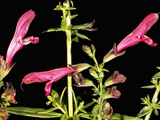
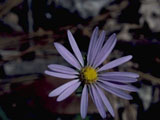
Salvia pentstemonoides (Big red sage) and Symphyotrichum praealtum var. praealtum (Tall aster) are two excellent plants for your garden, with fairly low maintenance needs. Both are native to Burnet County, so they are hardy in the USDA Hardiness Zone where they are growing. Both are perennials that die back to the ground and come up from the rosettes in the Spring and both thrive in sun or part shade. Don't worry about covering them in the ground. They are insulated by the warmth of the Earth; in fact, Big Red Sage is hardy from Zones 6a to 10b and Tall Aster grows as far north as Ontario in eastern Canada. Burnet County is in Zone 8b.
As far as thinning them, we would say you don't "need" to thin, you thin them when they are getting crowded or you need more plants in another area. We suggest you read this article on Caring for Your Perennials from Weston Gardens, especially this excerpt on time of thinning:
"Perennials, in general, should be transplanted during the season opposite of when they bloom. That is, transplant Spring and Summer-flowering perennials in the Fall and transplant Fall-flowering perennials in the early Spring."
Therefore, since the Big Red Sage blooms red in June to October and Tall Blue Aster blooms purple from October to November, both could be thinned in Spring.
From the Image Gallery
More Seasonal Tasks Questions
Mowing frequency of native lawn from Georgetown TX
August 18, 2012 - I have a native grass and wildflower lawn. At what frequency and when should the lawn be mowed?
view the full question and answer
Winter care for plants in Austin
December 05, 2008 - Hello, I'm just getting into the gardening thing, and have planted tons of plants this fall here in Austin. I'm a bit worried about them with winter right around the corner. My first question is r...
view the full question and answer
Tidying up Copper Canyon Daisies in San Antonio
March 30, 2010 - We have a small bed with 4 copper canyon daisies. We cut them back in the fall but have not pruned them during growing season; as a result they become a big tangle by September. Should they be pruned ...
view the full question and answer
Cutting Back Perennials in the Fall?
November 13, 2013 - We have large beds of flowering native perennials that we planted around our house as part of a landscape conservation plan (various Joe-Pyes, goldenrods, turtlehead, blazing star, brown-eyed Susans)....
view the full question and answer
Transplanting Trees in OH
May 10, 2012 - Is the middle of May too late to dig out Arborviteas and spruces to transplant? I live in central Ohio.
view the full question and answer
| Support the Wildflower Center by Donating Online or Becoming a Member today. |