Native Plants

Q. Who is Mr. Smarty Plants?
A: There are those who suspect Wildflower Center volunteers are the culpable and capable culprits. Yet, others think staff members play some, albeit small, role. You can torture us with your plant questions, but we will never reveal the Green Guru's secret identity.

Did you know you can access the Native Plant Information Network with your web-enabled smartphone?

Ask Mr. Smarty Plants
Ask Mr. Smarty Plants is a free service provided by the staff and volunteers at the Lady Bird Johnson Wildflower Center.

rate this answer

Tuesday - June 07, 2011
From: Rhinelander, WI
Region: Midwest
Topic: Shade Tolerant
Title: Plants for a shady hillside in WI
Answered by: Anne Bossart
QUESTION:
I would like to know what kind of plants I could plant on a northern exposure hillside to stop erosion. At the bottom of the hill is a lake. Also would putting rocks from the area as natural retaining work to stop erosion. There are a mixture of a few pines, maples and birches on this hillside also. I don't want to put any more trees on the hillside just some plants. ThanksANSWER:
It's a good idea to use the native rocks strategically to stabilize your slope. They don't necessarily need to be lined up as for a retaining wall, but can be placed as nature would. This will create places to nestle plants around them and slow the flow of water down the slope.
There are many woodland shrubs and herbaeous plants (grasses, ferns and perennials) that will grow oon your shady slope and complement the trees you have growing there.
The plants you use for the project will ultimately be the ones that are available in the nurseries, but to learn about the plants that are native to your area and suitable candidates visit our Native Plant Database and do a Combination Search for Wisconsin, the plant type (shrub, herb etc) and your conditions (shady and dry or moist?). The database will generate lists of plants with links to detailed information pages.
Some plants fom those lists to consider are:
Shrubs
Arctostaphylos uva-ursi (Kinnikinnick)
Diervilla lonicera (Northern bush honeysuckle)
Gaultheria procumbens (Checkerberry)
Hypericum prolificum (Shrubby st. johnswort)
Physocarpus opulifolius (Atlantic ninebark)
Symphoricarpos orbiculatus (Coralberry)
Perennials & Ferns
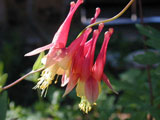
Aquilegia canadensis (Eastern red columbine)
Maianthemum stellatum (Starry false lily of the valley)
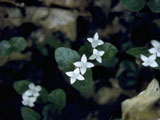
Mitchella repens (Partridgeberry)
Penstemon hirsutus (Hairy beardtongue)
Polygonatum biflorum (Smooth solomon's seal)
Polypodium virginianum (Rock polypody)
Pteridium aquilinum (Western bracken fern)
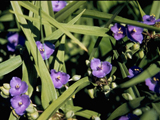
Tradescantia virginiana (Virginia spiderwort)
Here are some photos fom our Image Gallery:
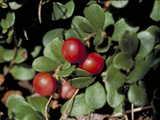
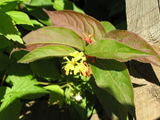
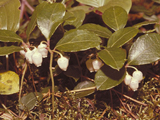

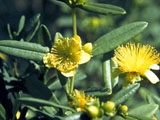
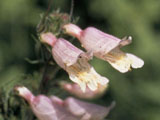
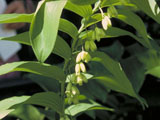
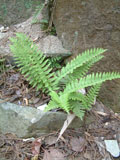
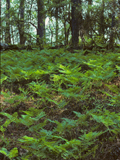
More Shade Tolerant Questions
Grass for shade under Post Oaks in Austin
October 04, 2008 - Can you recommend a water conserving grass for shade under Post Oaks in Austin. Very gravelly poor nutrient soil. thanks!
view the full question and answer
Non-Poisonous, Shade Tolerant Vine for Austin
February 01, 2011 - Hello,
I live in northwest Austin and have a very shady wood fence I would like to cover and was thinking about a vine. I have a toddler and a dog so anything poisonous is out of the question. I woul...
view the full question and answer
What will grow under a California Pepper tree?
April 03, 2009 - What will grow under a California Pepper tree with a shady area oak tree nearby in a coastal community?
view the full question and answer
Flowers under pine trees from Elkhart Indiana
May 02, 2013 - I have a number of pine trees at the back of my lot and would like to plant flowers under the tree. What can I plant?
view the full question and answer
Vines for Shade in Upstate New York
April 23, 2013 - Hello! I am looking for a non-invasive vine that will grow in heavy shade near my house in upstate New York.
view the full question and answer
| Support the Wildflower Center by Donating Online or Becoming a Member today. |