Native Plants

Q. Who is Mr. Smarty Plants?
A: There are those who suspect Wildflower Center volunteers are the culpable and capable culprits. Yet, others think staff members play some, albeit small, role. You can torture us with your plant questions, but we will never reveal the Green Guru's secret identity.

Did you know you can access the Native Plant Information Network with your web-enabled smartphone?

Ask Mr. Smarty Plants
Ask Mr. Smarty Plants is a free service provided by the staff and volunteers at the Lady Bird Johnson Wildflower Center.

rate this answer

Friday - May 06, 2011
From: Washington, DC
Region: Mid-Atlantic
Topic: Poisonous Plants
Title: Broad leaved evergreens for DC
Answered by: Anne Bossart
QUESTION:
We are looking for a flowering evergreen shrub, native to the mid-Atlantic, that grows in part shade but will tolerate full sun. We have been researching rhododendrons and azaleas but are concerned about the toxicity of the plants to humans. We have seen a lot of information on their attractiveness and toxicity to animals but are these shrubs a problem to have around small children?ANSWER:
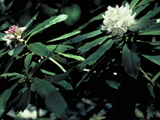
We understand your concern and you are right that ingestion of Rhododendron maximum (Great laurel) can be dangerous. Honey made fom the flowers can also be toxic.
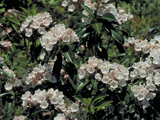
Kalmia latifolia (Mountain laurel), another flowering broad leaved evergreen native to your area and suitable for your conditions is also toxic. Both plants are members of the Heath Family.
That being said, both rhododendrons and mountain laurels are widely used as ornamental landscape plants and there are rarely problems, but if you think you cannot prevent your children from ingesting plant material, you should choose another plant.
If you decide to go with another plant, you can use our Native Plant Database to help with the selection. Scroll down to Combination Search and select: DC/shrub/part shade and moist soil (if that is what you have) and the size you are looking for. It will generate a list with links to detailed information pages and more images. You will find the rhododendron and mountain laurel on that list.
More Poisonous Plants Questions
Suitability of Carolina Cherry Laurel for Bulverde TX
October 24, 2012 - The local Home Depot is selling Carolina Cherry Laurel Trees. They look beautiful. Is this a good tree for Bulverde TX..20 miles north of San Antonio? Can it survive? Will it be a high maintenance...
view the full question and answer
Digging wild buttercup from roadside in Mechanicsville MD
May 28, 2012 - Mr. Smarty Plants, is it illegal to dig out wild buttercup in Maryland? I see them along the dirt road or just in the ditch. Since buttercup considered weed, I'm wondering what the law say about this...
view the full question and answer
Is the Texas buckeye as poisonous as the Ohio buckeye from Carrollton TX
April 10, 2011 - Is the Texas buckeye as poisonous as Ohio Buckeye?
view the full question and answer
Is Asclepias incarnata poisonous to dogs?
June 13, 2012 - Is Asclepias incarnata safe in a farm/yard with plenty of dogs running around? What happens if a dog eats the leaves or seeds or pods? Is eating any of these fatal to dogs?
view the full question and answer
Are the leaves of the Fruitless Palm Tree poisonous in Redding California?
October 18, 2010 - Are Fruitless Palm Tree leaves poisonous? I was poked in the hand with a leaf of one of the branches. It was a dead leaf/Branch? Please Help!
view the full question and answer
| Support the Wildflower Center by Donating Online or Becoming a Member today. |