Native Plants

Q. Who is Mr. Smarty Plants?
A: There are those who suspect Wildflower Center volunteers are the culpable and capable culprits. Yet, others think staff members play some, albeit small, role. You can torture us with your plant questions, but we will never reveal the Green Guru's secret identity.

Did you know you can access the Native Plant Information Network with your web-enabled smartphone?

Ask Mr. Smarty Plants
Ask Mr. Smarty Plants is a free service provided by the staff and volunteers at the Lady Bird Johnson Wildflower Center.

rate this answer

Friday - March 04, 2011
From: Atlanta, TX
Region: Southwest
Topic: Seeds and Seeding, Wildflowers
Title: How to grow bluebonnets in Atlanta TX
Answered by: Barbara Medford
QUESTION:
How can I grow bluebonnets in Atlanta Texas?ANSWER:
If "How can I grow bluebonnets where they don't normally grow" is not the most frequently asked question of Mr. Smarty Plants, it's right up there.
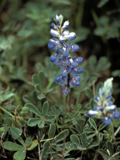
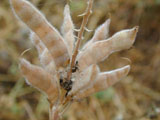
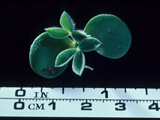
Whether you can grow them in the somewhat acidic soil of far northeast Texas probably depends on how hard you want to work on it, and how long you want the blooming plants to reproduce in the same space. There are 6 species of Lupinus that grow natively in Texas, and by act of the Legislature, if it's growing in Texas, it's a Texas bluebonnet and our State Flower. Two of those six, Lupinus perennis (Sundial lupine) and Lupinus subcarnosus (Sandyland bluebonnet) grow in parts of southeast Texas, but not way up where you are. Lupinus texensis (Texas bluebonnet) is probably what you want, and this USDA Plant Profile of that flower shows that they grow near, but not in, Cass County, TX.
This Previous Mr. Smarty Plants answer on growing bluebonnets out of their native range, including soil modification, etc. talks about personal experience trying to grow Texas bluebonnet in an acidic soil. Another previous question on growing bluebonnets in California explains the reasons why out-of-area bluebonnets seldom prosper, and suggests some alternative members of the Lupinus genus that are native to California.
Lupinus texensis (Texas bluebonnet) is endemic to Texas, although there has been some success in growing it in Florida, Louisiana and Oklahoma. It grows best, and voluntarily, in the alkaline soils of Central Texas. Soils in East Texas have had the benefits of many years of leaves dropping to the ground, decomposing into the soil, creating acidity. This is great if you want to grow hydrangeas or magnolias; bluebonnets, not so much.
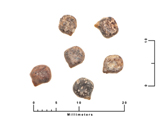
If you want to experiment, there is nothing to keep you from purchasing some Lupinus texensis (Texas bluebonnet) seeds, planting them in late Summer, in a sunny place, and see what happens. We will be interested to hear if you get bluebonnets and they persist, that is, make seeds and drop them, producing more plants from those seeds.
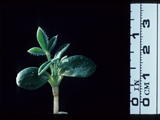
From the Image Gallery

More Wildflowers Questions
More on bluebonnets
January 09, 2007 - My wife has recently contacted and met relatives from Texas (her father was a war baby born in the 1940's). Her new found Aunt Sarah has kindly given me some Bluebonnet seeds to plant "a corner of T...
view the full question and answer
Smarty Plants on earliest blooming wildflowers
November 19, 2004 - For Spring, what are the earliest blooming wild flowers and when do they typically bloom?
I know it's terribly early to be predicting these things, but any idea if the 2005 Bluebonnet crop in Austi...
view the full question and answer
When will the bluebonnets appear this year?
February 04, 2016 - When will the bluebonnets appear this year? We have many friends and family who want to visit when they are in bloom.
Thanks.
view the full question and answer
Wildflowers native to Pennsylvania
April 02, 2008 - Please provide the names of a few wildflowers that are native to Pennsylvania.
view the full question and answer
Fertilizing wild bluebonnets
September 26, 2007 - Can you fertilize wild bluebonnets? If so, with what and when?
view the full question and answer
| Support the Wildflower Center by Donating Online or Becoming a Member today. |