Native Plants

Q. Who is Mr. Smarty Plants?
A: There are those who suspect Wildflower Center volunteers are the culpable and capable culprits. Yet, others think staff members play some, albeit small, role. You can torture us with your plant questions, but we will never reveal the Green Guru's secret identity.

Did you know you can access the Native Plant Information Network with your web-enabled smartphone?

Ask Mr. Smarty Plants
Ask Mr. Smarty Plants is a free service provided by the staff and volunteers at the Lady Bird Johnson Wildflower Center.

rate this answer

Monday - September 27, 2010
From: Lucas, TX
Region: Southwest
Topic: Propagation
Title: Propagating Eustoma exaltatum from seed in Lucas TX
Answered by: Leslie Uppinghouse
QUESTION:
Hello I know that Texas bluebells Eustoma exaltatum ssp. russellianum are supposed to be difficult to start from seed. Does Mr. Smarty Plants have any helpful hints? Thanks!ANSWER:
We will check the propagation notes for you in the Explore Plants section of our website. You can look up plants either by the common name or scientific name. We have chosen the scientific name Eustoma exaltatum ssp. russellianum (Texas bluebells). Once selected, you can scroll down to the end of the page and you will find this propagation information.
Propagation
Propagation Material: Seeds
Description: The seed is exceptionally small and somewhat difficult to germinate. The best results have come from surface seeding (since the seed requires light for germination) in flats at approximately 70 75 degrees. Field seeding can be done in spring or fall, however, spring germination usually results in the vegetative growth overwintering and not flowering until the second summer. Fall germination should produce flowers the first season.
Seed Collection: Collect seed in June, when seeds inside capsule are black.
Seed Treatment: The seed for E. grandiflorum is not commercially available, and thus, no large-scale seeding rates have been established. Note that the seed is exceedingly small one capsule can produce 1200 seedlings!
Commercially Avail: yes
Maintenance: When the seed capsule ripens (in September or October), the stalk should be cut back to 2 3 inches above the ground. By mid September, the base will develop a cluster of 8 to 10 new shoots. These will remain as a cluster of leaves throughout the winter and resume growth in the spring. Plants that overwinter are usually much stronger and have more flowers than they do the first year.
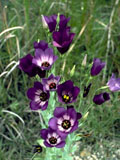
From our Native Plant Image Gallery:
More Propagation Questions
Planting time for native yucca seeds
August 11, 2008 - When and how do you plant yucca plant seeds and or/pods ?
I took them off of the stalks when I cut the stalks today .
view the full question and answer
Growing Big Red Sage from Seed in San Antonio
November 04, 2010 - I harvested some seed this year from my Big Red Salvia (Salvia penstemonoides). I have searched multiple sites looking for information on growing this wonderful salvia but cannot locate any informati...
view the full question and answer
Sapindus drummondii or Rhus aromatica for Austria
May 07, 2006 - Hy!
I'm from Austria/Europe, and interested in some North American native plants specially. It would be great if you can help me with my two questions:
Sapindus drummondii
I read from different...
view the full question and answer
Wildflowers after controlled burn in New Braunfels, TX
February 19, 2009 - I live in the Hill Country a few miles north of New Braunfels. As soon as we get enough rain to lift our burn ban, I will be thinning out some of my Ashe juniper and will do some burning in the open ...
view the full question and answer
Removal of leaves before transplanting
April 05, 2008 - Before transplanting a plant, is it a good idea to remove leaves?
view the full question and answer
| Support the Wildflower Center by Donating Online or Becoming a Member today. |