Native Plants

Q. Who is Mr. Smarty Plants?
A: There are those who suspect Wildflower Center volunteers are the culpable and capable culprits. Yet, others think staff members play some, albeit small, role. You can torture us with your plant questions, but we will never reveal the Green Guru's secret identity.

Did you know you can access the Native Plant Information Network with your web-enabled smartphone?

Ask Mr. Smarty Plants
Ask Mr. Smarty Plants is a free service provided by the staff and volunteers at the Lady Bird Johnson Wildflower Center.

rate this answer

Saturday - October 02, 2010
From: Butler, PA
Region: Mid-Atlantic
Topic: Wildflowers
Title: First to Bloom in Western PA
Answered by: Anne Bossart
QUESTION:
What spring wildflower is consistently among the first to bloom in Butler, PA?ANSWER:
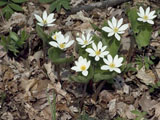
There is no definitive answer to your question. In the north the earliest wildflowers to bloom are the woodland ephemerals. They squeeze their whole cycle into the early spring while the sunlight reaches the ground. By the time the leaves are on the trees, shading the forest floor, many of these plants are getting ready to go dormant. Below is a list of early spring wildflowers found in western Pennsylvania. Two of the earliest could be:
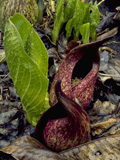
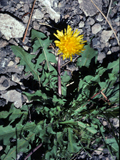
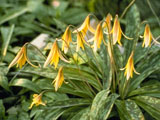
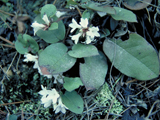
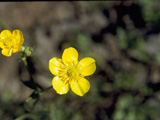
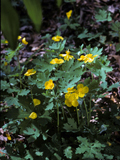
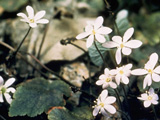
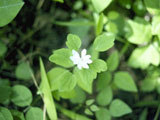
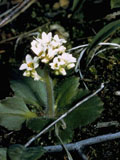
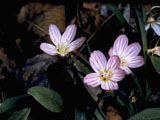
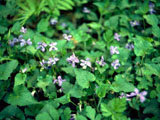
Erigenia bulbosa (harbinger of spring) and Symplocarpus foetidus (skunk cabbage) which could bloom as early as February, depending on factors such as location and winter snow cover. The remainder of the flowers on the list could begin blooming in March. They can't really be put in "spring appearance" order since when a plant blooms depends on its location and microclimate but I do think I could put Taraxacum officinale (common dandelion) near the beginning of the list. Erythronium americanum (dogtooth violet) Epigaea repens (trailing arbutus) Sanguinaria canadensis (bloodroot) Ranunculus fascicularis (early buttercup) Stylophorum diphyllum (celandine poppy) Cardamine douglassii (limestone bittercress) and photos Hepatica nobilis var. acuta (sharplobe hepatica) Thalictrum thalictroides (rue anemone) Saxifraga virginiensis (early saxifrage) Claytonia virginica (Virginia springbeauty) Claytonia caroliniana (Carolina springbeauty) Viola sororia (common blue violet) Draba verna (Whitlow grass or spring draba) You can find more native plants of Pennsylvania by doing a "Combination Search" in our Native Plant Database and you can "Narrow Your Search" by using various Characters (e.g., Habit (general appearance), Light requirement, etc.). Visit the Western Pennsylvania Wildflowers page to find more photos of the above plants (search alphabetically by common name) as well as many more plants, both native and non-native, found in western Pennsylvania.


More Wildflowers Questions
Wildflowers for April wedding near Austin TX
August 31, 2015 - Home wedding April 2016. Live North of Austin.on 200 acres ranch and would like to plant wildflowers. What to plant? When to plant? Flowers that will sustain in vase or bouquet?
view the full question and answer
Starting Venus Flytrap From Seed
September 05, 2013 - I am a high school student doing a project on the Venus flytrap and would like you to help me by answering the following questions: What are the Venus flytrap predators and prey? How to raise a Venus ...
view the full question and answer
Wildflower garden for Driftwood, TX
August 20, 2013 - I would like to plant wildflowers in a fairly large field on a slope. The slope is a little rocky and is located in Driftwood, TX. I have been thinking about a mixture of Bluebonnets and Indian Blank...
view the full question and answer
Possible tax exemptions for wildlife management
August 07, 2006 - I am interested in finding out whether there are state grants to help land owners grow wildflowers on otherwise unused portions of their properties. Would you happen to know whom I should contact or w...
view the full question and answer
More on bluebonnets
April 05, 2006 - Hello:
We have been told that the sparse Bluebonnet
appearance this Spring is due to sparse rainfall at the
appropriate times. Were there fewer seeds to sprout
and grow? Or are the seeds still ...
view the full question and answer
| Support the Wildflower Center by Donating Online or Becoming a Member today. |