Native Plants

Q. Who is Mr. Smarty Plants?
A: There are those who suspect Wildflower Center volunteers are the culpable and capable culprits. Yet, others think staff members play some, albeit small, role. You can torture us with your plant questions, but we will never reveal the Green Guru's secret identity.
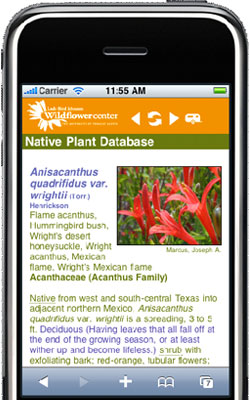
Did you know you can access the Native Plant Information Network with your web-enabled smartphone?

Ask Mr. Smarty Plants
Ask Mr. Smarty Plants is a free service provided by the staff and volunteers at the Lady Bird Johnson Wildflower Center.

rate this answer

Wednesday - June 02, 2010
From: Hinsdale, IL
Region: Midwest
Topic: Best of Smarty, General Botany
Title: Burn the wetlands
Answered by: Damon Waitt
QUESTION:
Can the wetlands of Louisiana that have been soaked in oil be burned? I am a native plant gardener in the midwest. Burning is a natural process in the prairie. Southerners are not used to this and may be ignoring a very simple solution to the wetlands that already have been devastated by oil. We could be looking at have those grasses being rejuvenated within weeks with a good burn.ANSWER:
That is an interesting proposition. As you are aware fire is an important management tool for restoring prairies but wetlands are a whole other kind of ecosystem. They are difficult to burn (some must be drained first) and once burned it takes them years to rebuild enough vegetation for another burn so the timing has to be just right to get the most oil out of the wetland. So....while it is a viable option it is considered by most to be an option of last resort.
More Best of Smarty Questions
True date for Earth Day
March 09, 2006 - My grandson asked me to verify the correct date for Earth Day 2006.
Sites on the internet say
(a) Earth Day USA is April 22, 2006.
(b) International Earth Day is M...
view the full question and answer
Help! The deer are eating my landscape.
March 14, 2004 - Help! The deer are eating my landscape. Is there anything I can plant that they won’t eat?
view the full question and answer
Mixture of native grasses as opposed to buffalo grass monoculture
November 26, 2003 - My husband and I just built our home on Lake Travis. Our lot is very rocky and is on the side of a hill. We would like to plant something on the incline at the front of our home that doesn't need a l...
view the full question and answer
Growing Native Plants in Juniper litter from Wimberley, TX
October 04, 2010 - Junipers create an environment under their canopy that prohibits growth of other plants. I have a virgin lot that has been cleared of many juniper but has remaining heavy natural leaf mold containing...
view the full question and answer
Is there an automated image download function for the NPIN Image Gallery?
November 03, 2009 - Hi, I have a database/web technical question. Do you provide an interface to retrieve photos from your website programatically?
Thanks!
view the full question and answer
| Support the Wildflower Center by Donating Online or Becoming a Member today. |