Native Plants

Q. Who is Mr. Smarty Plants?
A: There are those who suspect Wildflower Center volunteers are the culpable and capable culprits. Yet, others think staff members play some, albeit small, role. You can torture us with your plant questions, but we will never reveal the Green Guru's secret identity.

Did you know you can access the Native Plant Information Network with your web-enabled smartphone?

Ask Mr. Smarty Plants
Ask Mr. Smarty Plants is a free service provided by the staff and volunteers at the Lady Bird Johnson Wildflower Center.

rate this answer

Sunday - May 09, 2010
From: Taylor, TX
Region: Southwest
Topic: Diseases and Disorders
Title: Problems with winecups in Taylor, TX
Answered by: Barbara Medford
QUESTION:
I live in Taylor in Williamson County, Tx,. I have wine cups growing. They are lush and blooming, but I am now noticing what looks like spores forming under the leaves and the plants seem to be suffering from it. Do you know what this could be? Baking soda mix with liquid soap a possible remedy? This is their 2nd year in the garden. Rock on with all the help you provide gardeners!ANSWER:
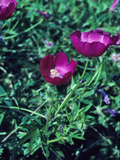
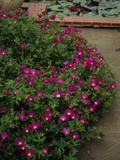
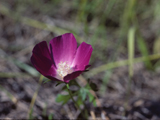
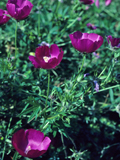
There are 4 plants native to Central Texas with "winecup" as one of their common names. Since you mention this is the second year for your plants, we are going to say it is the perennial Callirhoe involucrata (purple poppymallow). We are puzzled by the presence of the spots, but our webpage on this plant mentions that it is susceptible to rust during wet seasons, which we are not having right now in Central Texas but have done earlier in the year. We also noted that it must be in well-drained soil. Since it is somewhat a trailing plant, we think the moisture of the soil might be the first suspect, causing rust or perhaps a little mildew. We have also heard complaints about the numbers of snails and slugs that are around this year, also because of the moisture, but that doesn't sound like slug damage. As long as your plants appear healthy and are blooming, we wouldn't worry too much. Avoid over-watering and try to improve the air circulation around your plants, perhaps with some shredded hardwood mulch beneath the plants to get them off the soil.
From our Native Plant Image Gallery:
More Diseases and Disorders Questions
Is yellow tulip poplar alive from Gilbertsville PA
March 30, 2013 - How can I tell if my yellow tulip poplar is alive?
thank you
view the full question and answer
Will Mountain Laurels be harmed by juglones from my pecan tree?
May 06, 2009 - Hi. I just bought a house. It has a big pecan tree at the edge of the front lawn next to the street. I guess it's about 25 feet from the front of the house. I was thinking of planting mountain la...
view the full question and answer
Reason for tree canopy dieback from Mahopac NY
May 21, 2012 - Dear Mr. Smarty Plants: Not a questions, just sharing, re person in Texas whose Ash Jupiter appeared to be dying "canopy very thin on top". We moved to Putnam Co. NY in 1970. Our house was shaded by...
view the full question and answer
More trees to go with live oaks in Schertz TX
July 13, 2010 - We moved to a new house that has two recently planted live oak trees. Other than those two little trees there is nothing else on the property. Because of what I read about the oak wilt I would like ...
view the full question and answer
Death of lantana in Bryan TX
March 28, 2013 - I would like to know what killed several new gold lantana in a single bed that died over the winter. They looked quite healthy last fall. I have several other new gold lantana that survived the wint...
view the full question and answer
| Support the Wildflower Center by Donating Online or Becoming a Member today. |