Native Plants

Q. Who is Mr. Smarty Plants?
A: There are those who suspect Wildflower Center volunteers are the culpable and capable culprits. Yet, others think staff members play some, albeit small, role. You can torture us with your plant questions, but we will never reveal the Green Guru's secret identity.

Did you know you can access the Native Plant Information Network with your web-enabled smartphone?

Ask Mr. Smarty Plants
Ask Mr. Smarty Plants is a free service provided by the staff and volunteers at the Lady Bird Johnson Wildflower Center.

rate this answer

Sunday - May 09, 2010
From: Taylor, TX
Region: Southwest
Topic: Diseases and Disorders
Title: Problems with winecups in Taylor, TX
Answered by: Barbara Medford
QUESTION:
I live in Taylor in Williamson County, Tx,. I have wine cups growing. They are lush and blooming, but I am now noticing what looks like spores forming under the leaves and the plants seem to be suffering from it. Do you know what this could be? Baking soda mix with liquid soap a possible remedy? This is their 2nd year in the garden. Rock on with all the help you provide gardeners!ANSWER:
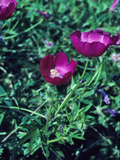
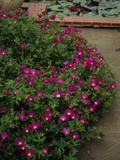
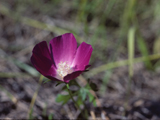
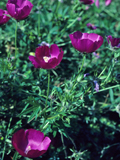
There are 4 plants native to Central Texas with "winecup" as one of their common names. Since you mention this is the second year for your plants, we are going to say it is the perennial Callirhoe involucrata (purple poppymallow). We are puzzled by the presence of the spots, but our webpage on this plant mentions that it is susceptible to rust during wet seasons, which we are not having right now in Central Texas but have done earlier in the year. We also noted that it must be in well-drained soil. Since it is somewhat a trailing plant, we think the moisture of the soil might be the first suspect, causing rust or perhaps a little mildew. We have also heard complaints about the numbers of snails and slugs that are around this year, also because of the moisture, but that doesn't sound like slug damage. As long as your plants appear healthy and are blooming, we wouldn't worry too much. Avoid over-watering and try to improve the air circulation around your plants, perhaps with some shredded hardwood mulch beneath the plants to get them off the soil.
From our Native Plant Image Gallery:
More Diseases and Disorders Questions
Growth on trunk of Eastern Redbud
November 14, 2007 - My seven yr. old Eastern Redbud has a large patch (12x4inches) of white grey, shell or mushroom-like growth on the trunk. The bark has a wide split so the growth is on the layer of wood inside the sp...
view the full question and answer
Reason for die-back of native Mahonia repens
April 01, 2008 - I have several mahonia repens plants planted on my property. This is the third spring for them and I have noticed that they look like they might be dying out. The leaves have turned brown and are cu...
view the full question and answer
Precautions regarding pruning live oaks in the Austin area.
October 27, 2015 - Is it still recommended that we clean pruning shears and spray wounds when pruning live oaks in the Austin area?
view the full question and answer
Problems with evergreen sumac in San Antonio
May 03, 2012 - I planted 5 5-gallon (approximately 2 feet tall) evergreen sumac in early January. Since that time they have sprouted out new shoot with new leaves several times - every time the leaves have wilted a...
view the full question and answer
Which plants are resistant to dog urine in Ashmore, IL??
May 21, 2012 - Which native plants are resistant to dogs urinating on them?
view the full question and answer
| Support the Wildflower Center by Donating Online or Becoming a Member today. |