Native Plants

Q. Who is Mr. Smarty Plants?
A: There are those who suspect Wildflower Center volunteers are the culpable and capable culprits. Yet, others think staff members play some, albeit small, role. You can torture us with your plant questions, but we will never reveal the Green Guru's secret identity.

Did you know you can access the Native Plant Information Network with your web-enabled smartphone?

Ask Mr. Smarty Plants
Ask Mr. Smarty Plants is a free service provided by the staff and volunteers at the Lady Bird Johnson Wildflower Center.

rate this answer

Thursday - December 10, 2009
From: Humble, TX
Region: Southwest
Topic: Compost and Mulch, Grasses or Grass-like
Title: Native grass mix suitable for Houston
Answered by: Nan Hampton
QUESTION:
Do you have a native grass mix that is appropriate to the Houston area- or will the one you have developed to this point work as well here as it does in Central Texas? If not, when will you begin to develop such a grass for this area? Best regards.ANSWER:
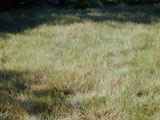
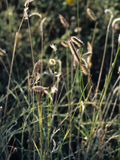
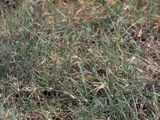
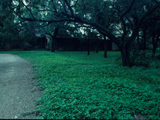
Indeed, we do! Dr. Mark Simmons, Wildflower Center ecologist, has been leading the research to determine the best mix for native turf grass for Texas and the winners are: Bouteloua dactyloides (buffalograss), Bouteloua gracilis (blue grama), and Hilaria belangeri (curly-mesquite). There are caveats, however—all three of these grasses love the sun and don't do well in shade (less than 2 hours or sun per day) or part shade (2 to 6 hours of sun per day) and buffalograss doesn't like sand. If your lawn has shady areas, you can use a shade-tolerant groundcover in that area and use the turf mix in the sunny areas. If your lawn is extremely sandy, you will need to add compost to the sand for buffalograss to do well. Indeed, adding compost to your soil, no matter what its major component is, is a good idea. Please see our How to Article, Native Lawns, for more information about creating a native lawn with these grasses. The article also gives links to seed companies that carry seeds for these grasses. Here are a few suggestions for shade-loving groundcovers:
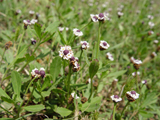
Calyptocarpus vialis (straggler daisy)
Phyla nodiflora (turkey tangle fogfruit)
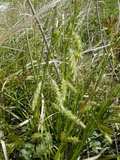
Carex cherokeensis (Cherokee sedge)
You can see more native plants for the Houston area from the Native Plant Society of Texas-Houston Chapter.
Here are photos from our Image Gallery:
More Compost and Mulch Questions
Frost damage to native plants in Austin
December 19, 2011 - Hello,
We bought a number of native plants at this fall's WFC sale and planted them. The recent frost seems to have defoliated our pitcher sage, beautyberry, butterflyweed, and flame acanthus plan...
view the full question and answer
How to make a lawn into a prairie in Arlington, Texas
September 15, 2010 - I am removing lawn grasses in order to start a native prairie meadow. After grass removal, I'll put down 1/2" of compost. I will broadcast wildflower seeds on the compost. If I mulch after broadcas...
view the full question and answer
Possibility of growing plants in St. Peter Sandstone
April 02, 2008 - Can you grow plants or native plants in St. Peter Sandstone or amend it?
view the full question and answer
Transplanting redbud from field in Edmond, OK
March 30, 2009 - I want to transplant a small redbud from a field to my yard. The trunk diam is about 1.5" and the tree is about 4' tall. What is the best way to do this? Should I plant it in a pot first?
view the full question and answer
Area needing soil amendment in San Diego
December 02, 2009 - I have a dirt area in the corner where my fence comes together. The dirt is clay-like and during the winter the area gets very little, if any, sun and during the summer it gets 4-6 hours of sun. Wha...
view the full question and answer
| Support the Wildflower Center by Donating Online or Becoming a Member today. |