Native Plants

Q. Who is Mr. Smarty Plants?
A: There are those who suspect Wildflower Center volunteers are the culpable and capable culprits. Yet, others think staff members play some, albeit small, role. You can torture us with your plant questions, but we will never reveal the Green Guru's secret identity.

Did you know you can access the Native Plant Information Network with your web-enabled smartphone?

Ask Mr. Smarty Plants
Ask Mr. Smarty Plants is a free service provided by the staff and volunteers at the Lady Bird Johnson Wildflower Center.

rate this answer

Wednesday - October 21, 2009
From: Charlottesville, VA
Region: Mid-Atlantic
Topic: Rain Gardens
Title: Edible Plants for a Virginia Rain Garden
Answered by: Dean Garrett
QUESTION:
Can you recommend edible plants that would be appropriate for use in a rain garden? I'm located in Charlottesville, VA, but this can be in general as well.ANSWER:
There are several edible plants native to your area that should do well in the seasonal poor drainge of a rain garden.
Leaves for teas and seasoning:
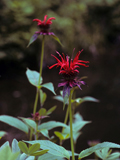
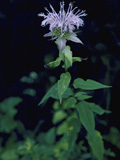
- Three local Monarda species do well in moist soils: White Bergamot (Monarda clinopodia); Scarlet Beebalm, also known as Red Bergamot or Oswego Tea (Monarda didyma); and Purple Bergamot (Monarda media)
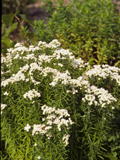
- Two species of Mountain Mint: Narrowleaf Mountain Mint (Pycnanthemum tenuifolium) and Virginia Mountain Mint (Pycnanthemum virginianum)
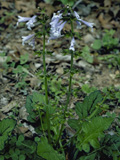
- Lyreleaf Sage (Salvia lyrata)
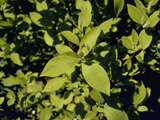
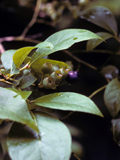
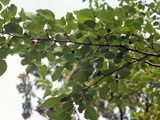
- Spicebush (Lindera benzoin), a shrub
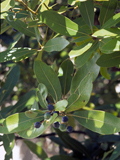
- Redbay (Persea borbonia), a small to medium-sized tree
Edible fruit:
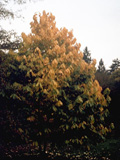
- Pawpaw (Asimina triloba), a shrub or small tree
- Highbush Blueberry (Vaccinium corymbosum), a shrub
- Red Mulberry (Morus rubra), a small to medium-sized tree
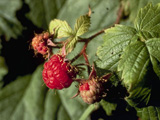
- American Red Raspberry (Rubus idaeus), a prickly trailing plant
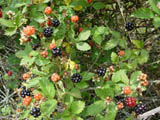
- Southern Dewberry (Rubus trivialis), a prickly trailing plant
Edible roots:
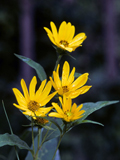
- Sunchoke, also known as Jerusalem Artichoke (Helianthus tuberosus), a kind of sunflower
That should get you started. For more information about rain gardens in your state, check out this .pdf file from the Virginia Department of Forestry: Rain Gardens Technical Guide.
More Rain Gardens Questions
Looking for native plants for a rain garden in Arlington, TX.
March 12, 2012 - I am looking for native Texas plants that would do well in rain gardens. Do you have any suggestions?
view the full question and answer
Bioswale for Indianapolis
September 13, 2009 - The city of Indianapolis has a very historic Central Canal, which was built in the 1830s. Due to erosion, the parent company of Indianapolis Water, Veolia, has proposed covering the banks with a type ...
view the full question and answer
Expanding clay soils near rain garden
May 11, 2009 - I want to put a rain garden in my yard in central TX (Kyle). My subdivision architectural review committee expressed concerns about the expansive clay soils becoming saturated and possibly shortening...
view the full question and answer
Rain garden plants for Austin
March 20, 2010 - I have a 7'x1' shaded area in between my house and sidewalk where the downspout is, and would like to add plants for a more eco-friendly drainage solution. Which plants would be best? I know that th...
view the full question and answer
Rain garden plants for DC
March 23, 2011 - Please recommend deep-rooted, native, perennial plants, 1-3 feet high, for an area that is moist and gets approximately 3 hours of day of afternoon sun. During rain storms this garden is in a low area...
view the full question and answer
| Support the Wildflower Center by Donating Online or Becoming a Member today. |