Native Plants

Q. Who is Mr. Smarty Plants?
A: There are those who suspect Wildflower Center volunteers are the culpable and capable culprits. Yet, others think staff members play some, albeit small, role. You can torture us with your plant questions, but we will never reveal the Green Guru's secret identity.
Did you know you can access the Native Plant Information Network with your web-enabled smartphone?
Ask Mr. Smarty Plants
Ask Mr. Smarty Plants is a free service provided by the staff and volunteers at the Lady Bird Johnson Wildflower Center.

rate this answer

Thursday - September 10, 2009
From: Johnson City, TN
Region: Southeast
Topic: Trees
Title: Pecan tree for Johnson City TN
Answered by: Barbara Medford
QUESTION:
I live in E. Tennessee and was wondering if there are any pecan trees that can be grown here? If so, which type? I am a native Texan and love pecans. I would appreciate any information you can give me.ANSWER:
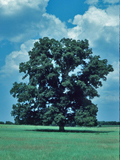
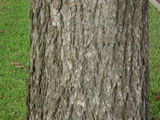
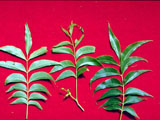
Carya illinoinensis (pecan) can certainly be grown in Tennessee. This USDA Plant Profile does not show them growing in the extreme northeastern tip where Washington County is, but we believe that they probably would flourish there if the soils are moist. However, don't buy the ingredients for pecan pie quite yet; the tree is slow-growing, tends to bear nuts in alternate years and will not ordinarily begin bearing until it is 15 to 20 years old. The best nut production is on trees 75 to 225 years old. Here are the Growing Conditions from our Native Plant Database:
Water Use: High
Light Requirement: Sun
Soil Moisture: Moist
CaCO3 Tolerance: Low
Cold Tolerant: yes
Soil Description: Rich, moist, well-drained soils. Sandy, Sandy Loam, Medium Loam, Clay Loam, Clay, Caliche type
Conditions Comments: The sweet, edible nut, makes pecan the best hickory for fruit production. The tree does not bear liberal quantities of fruit in the northern part of its range, but makes an interesting ornamental there. Susceptible to galls, twig girdlers, aphids, borers, weevils, pecan scab, tent caterpillars, and webworms. Slow-growing. Difficult to transplant because of a large taproot.
For more information, see this Floridata website Carya illinoinensi. As mentioned above, the young tree has a long taproot which, if damaged, could result in the death of the tree. So, you are going to have to begin with a very small tree, and let it grow quite a while before you can expect a crop. When it does begin to bear, you can expect small seedlings popping up everywhere, mostly planted by squirrels. They and other small mammals, even some birds, are going to be waiting for those nuts, too. The tree gets quite large and is not a good selection for a small yard.
From our Native Plant Image Gallery
More Trees Questions
Leaf spot as indicator of Oak Wilt Disease
May 26, 2007 - I live close to the Wilflower Center. I have two trees in my front yard which are just now showing brown spots on the leaves.
I fear this may be oak wilt. Would it be possible for me to bring som...
view the full question and answer
Difference between liveoaks (Quercus fusiformis and Q. virginiana)
March 17, 2008 - I am a little confused on the identification differences between Quercus fusiformis and Quercus virginiana. How can you properly identify between the two?
view the full question and answer
What to do about volunteer trees growing beneath a large live oak tree in Austin, TX
January 08, 2013 - We have a large live oak tree. Several volunteer trees are growing directly underneath it and into its branches. I want to cut them down if they are going to hurt the long term health of the live oak....
view the full question and answer
Disease of eastern red cedars (Juniperus virginiana)
August 01, 2010 - I have multiple Eastern Red Cedars spaced in my woods which are sick and dying. Some were transplanted years ago, others are volunteers, all are less than 4 ft tall. The foliage turns brown in vario...
view the full question and answer
Cherry laurels next to retaining wall in Austin
September 18, 2010 - My neigbors have 2 cherry laurel trees in their back yard planted within 4 feet of my retaining wall and fence. I am worried the root system will damage my retaining wall. The branches are already pus...
view the full question and answer
| Support the Wildflower Center by Donating Online or Becoming a Member today. |