Native Plants

Q. Who is Mr. Smarty Plants?
A: There are those who suspect Wildflower Center volunteers are the culpable and capable culprits. Yet, others think staff members play some, albeit small, role. You can torture us with your plant questions, but we will never reveal the Green Guru's secret identity.

Did you know you can access the Native Plant Information Network with your web-enabled smartphone?

Ask Mr. Smarty Plants
Ask Mr. Smarty Plants is a free service provided by the staff and volunteers at the Lady Bird Johnson Wildflower Center.

rate this answer

Sunday - August 23, 2009
From: Lexington, TX
Region: Southwest
Topic: Trees
Title: Scrub oaks dropping limbs in Lexington TX
Answered by: Barbara Medford
QUESTION:
We live in the country between Elgin and Lexington. One of our "scrub" oaks is dropping large limbs. On examination, the limbs have green leaves and they do not appear to be rotted. Do you think the cause is extreme lack of rain or disease?ANSWER:
We are a little puzzled (as we usually are about common names) as to what plant you are referring to. We found four members of the Quercus (oak) genus with the common name "scrub oak" in our Native Plant Database, but only two of them are native even to Texas, and none to the actual area of Lee County you are referring to. These oaks are Quercus mohriana (Mohr oak), native to the Big Bend area and portions of the Panhandle, and Quercus turbinella (Sonoran scrub oak) which just shows up in a couple counties in the far western tip of Texas.
Whatever the scientific name of the trees you are concerned with, there is no doubt that the heat and drouth are a contributing factor to many of the plant problems we are experiencing in Central Texas. Whether that is the only cause of the problem or there is another cause, pest or disease, we have no way of knowing, that's a little out of our line. You can bet if you are having that trouble, others in your area are, too. The best way to contact an expert who not only knows what plant you have, but what is causing the problem and, hopefully, what to do about it is to go to this website for the Texas A&M AgriLIFE Extension Office for Lee County.
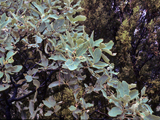
Pictures of Quercus turbinella (Sonoran scrub oak)
From our Native Plant Image Gallery

More Trees Questions
Transplanting time for Smoketree in Quebec
September 14, 2006 - I would like to transplant my smoke tree. It is two years old. When would be the best time of the year to transplant. I live in Zone 4.
view the full question and answer
Elimination of live oak adventitious sprouts in San Angelo TX
July 28, 2009 - Live oak sprouts. The main tree was removed several years ago and we still have the sprouts coming up in the yard. How do we stop this?
view the full question and answer
Transplanting a magnolia tree in Avon IN
July 04, 2009 - We moved in our house a couple of years ago,We have a small Magnolia tree, well, looks like a bush right in front of our porch. We want to move it but do not know the best time to move. Can you tell m...
view the full question and answer
Landscape buffer in Bluffton SC
January 21, 2010 - I have to install an irrigated landscape buffer along the outside of a 6'high x 42'long privacy fence about 8' from a public sidewalk in Bluffton, SC. The property owners association requires 4' t...
view the full question and answer
Evergreen Trees for Cedar Creek, TX
August 14, 2013 - Hello I am wanting to plant some evergreen trees on my property out in Cedar Creek Texas. We have a lot of cedar trees but I really would like some live oaks. Is it possible to grow live oaks or somet...
view the full question and answer
| Support the Wildflower Center by Donating Online or Becoming a Member today. |