Native Plants

Q. Who is Mr. Smarty Plants?
A: There are those who suspect Wildflower Center volunteers are the culpable and capable culprits. Yet, others think staff members play some, albeit small, role. You can torture us with your plant questions, but we will never reveal the Green Guru's secret identity.

Did you know you can access the Native Plant Information Network with your web-enabled smartphone?

Ask Mr. Smarty Plants
Ask Mr. Smarty Plants is a free service provided by the staff and volunteers at the Lady Bird Johnson Wildflower Center.

rate this answer

Sunday - August 09, 2009
From: St. Petersburg FL, FL
Region: Southeast
Topic: Propagation
Title: Propagation of Century Plant in St. Petersburg FL
Answered by: Barbara Medford
QUESTION:
CENTURY PLANT PROPAGATIONANSWER:
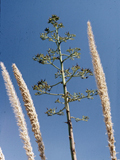
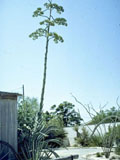
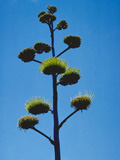
Apparently, you are a person of few words, but we get your drift. In our Native Plant Database, there are nine plants with the common name "Century plant." All are members of the genus Agave, and not a single one is native to Florida, or even close. Agave americana (American century plant) has these propagation instructions on our website page:
Propagation
Propagation Material: Seeds
Description: Division by offshoot of pups, seed
Commercially Avail: yes
Maintenance: Removal of old lower leaves or dead plants can be difficult due to size and leaf tip spines.
From the Master Gardeners of the University of Arizona, Pima County Cooperative Extension, we found this information page on Century Plant. From Floridata, of all places, more information on Agave americana.
To quote from one of our own previous answers:
"Agaves produce new smaller plants around their base. All you need do is remove the pups from the mother plant using a trowel or knife and put them in smaller pots with the same kind of soil mixture that your original plant has been thriving in. If you don't know what the original is growing in, nurseries carry "cactus mix" potting soil which is grittier and more like the desert ground the plants are used to. Keep them watered, but let the soil dry a bit between waterings so they don't rot. These pups can have very long roots that connect them to the mother plant, but you can break them off to about the same length as the height of the plant or whatever will fit in your new pot. Even if you think you have lost too much of the root, pot it up anyway and see what happens. Agaves are very hardy and forgiving plants!"
More Propagation Questions
Moving milkweed to another location in Maine, NY
April 15, 2010 - I live in up-state New York. I have a 'patch' of milkweed growing where I don't really want it to grow - but have left it because the butterflies and bees love it. I would like it to grow in my ba...
view the full question and answer
Long term storam of Lupinus arboreus seeds
July 21, 2007 - Hi - I was wondering what the best way to store lupine seeds (for long-term storage and maximum viability) is? I am a graduate student at Berkeley studying Lupinus arboreus. We have been storing seeds...
view the full question and answer
Propagation of native American beautyberry in North Carolina
August 31, 2008 - I have found a beauty berry bush growing wild in the woods. It is huge! I broke off a couple of branches (1/4 " in diameter) and wonder if it will root if I just stick it in good moist soil. I alr...
view the full question and answer
Harvest dates-eastern Oregon
September 07, 2007 - I am looking for a source to provide me with harvest dates for seed of shrubs, grasses and wild flowers native to eastern Oregon.
view the full question and answer
Blooming but not berrying American bittersweet from Pendleton IN
May 29, 2013 - I have had a bittersweet plant for years, it blooms but not berries. How do I tell if it is male or female so I can buy the opposite? It is currently blooming.
view the full question and answer
| Support the Wildflower Center by Donating Online or Becoming a Member today. |