Native Plants

Q. Who is Mr. Smarty Plants?
A: There are those who suspect Wildflower Center volunteers are the culpable and capable culprits. Yet, others think staff members play some, albeit small, role. You can torture us with your plant questions, but we will never reveal the Green Guru's secret identity.

Did you know you can access the Native Plant Information Network with your web-enabled smartphone?

Ask Mr. Smarty Plants
Ask Mr. Smarty Plants is a free service provided by the staff and volunteers at the Lady Bird Johnson Wildflower Center.

rate this answer

Saturday - July 11, 2009
From: Mechanicsburg, PA
Region: Mid-Atlantic
Topic: Groundcovers
Title: Non-vascular moss between flagstones in Mechanicsburg PA
Answered by: Barbara Medford
QUESTION:
We would like to plant moss between our flagstone. However, the moss will have full sun all day. Can you recommend a moss for Central Pennsylvania near Harrisburg?ANSWER:
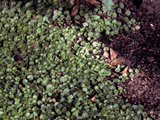
There are about 12,000 species of non-vascular plants referred to as "moss;" since we deal only with vascular plants, we can't help you with that. We do know that mosses need a damp, shady environment, which doesn't sound like your description. We Googled on "Moss for paths" and found this gardenhive.com website "How do you maintain a moss path?" One suggestion we might make is a good quality shredded hardwood mulch, if you feel the need for something sunworthy between your flagstones. We searched our Native Plant Database for low growing plants native to Pennsylvania that could tolerate full sun, and found 5 that might work for you.
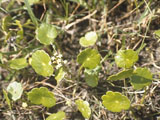
Hydrocotyle umbellata (manyflower marshpennywort) - 8" tall, blooms white April to October, sun, part shade or shade, moist soil
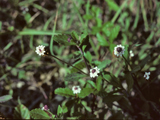
Phyla nodiflora (turkey tangle fogfruit) - about 6" tall, semi-evergreen, blooms white May to October, sun or part shade
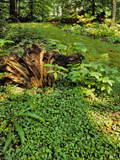
Phlox stolonifera (creeping phlox) - to 1 ft. tall, blooms white, blue, purple April and May, sun, part shade or shade
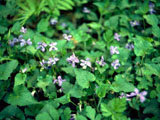
Viola sororia (common blue violet) - 6 to 10" tall, reseeding annual, blooms white, pink, blue, purple March to May, sun or part shade
Dichondra carolinensis (Carolina ponysfoot) - about 4" tall, sun or part shade
More Groundcovers Questions
Plants for a mixed border in Houston
February 22, 2010 - I live in Houston and have a flowerbed I'd like to fill with plants that will look good year-round. The back is already lined with 6-foot shrubs so nothing like that. I'd like something with colorf...
view the full question and answer
Low plants to cover bank too steep to mow
June 26, 2008 - I have a bank along the road that is too steep to mow. This bank faces east and only gets 2 - 4 hours per day of sunlight. I'd like to try ground cover to prevent erosion, however visibility is a p...
view the full question and answer
Drought resistant ground cover for Rancho Cucamonga CA
April 16, 2011 - I live in Southern California. Could you please recommend a low maintenance, drought resistant ground cover that does not attract rodents to create as their home (more than one suggestion would be GR...
view the full question and answer
Groundcover for Shade in Spicewood
September 16, 2015 - We live in Spicewood area in Austin, TX. Our front yard is yellow almost all summer, I was thinking of replacing lawn with a ground cover which can live on once a week sprinkler and no mowing. Also th...
view the full question and answer
Plants to grow between patio pavers
March 15, 2013 - We'd like to use poured concrete pavers for a deck. What grows well, whether it be grass or other, between these. We'll have 4-6" between 4 foot pavers. And would love to find something that does...
view the full question and answer
| Support the Wildflower Center by Donating Online or Becoming a Member today. |