Native Plants

Q. Who is Mr. Smarty Plants?
A: There are those who suspect Wildflower Center volunteers are the culpable and capable culprits. Yet, others think staff members play some, albeit small, role. You can torture us with your plant questions, but we will never reveal the Green Guru's secret identity.

Did you know you can access the Native Plant Information Network with your web-enabled smartphone?

Ask Mr. Smarty Plants
Ask Mr. Smarty Plants is a free service provided by the staff and volunteers at the Lady Bird Johnson Wildflower Center.

rate this answer

Friday - July 10, 2009
From: Peoria, IL
Region: Midwest
Topic: Poisonous Plants
Title: Plant identification from Peoria IL
Answered by: Barbara Medford
QUESTION:
I removed a plant from our workplace that employees were afraid was hallucinogenic seeds. Central Illinois. Very purple stem. Purple flowers. Black seeds. Any ideas?ANSWER:
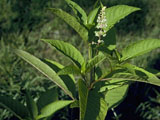
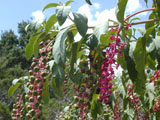
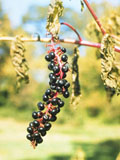
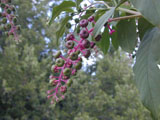
Usually, it is a difficult (if not impossible) task to identify a plant by description alone, but Mr. Smarty Plants is pretty sure you are describing Phytolacca americana (American pokeweed). it is a pretty distinctive plant and certainly gets your attention with its red stem and large bunches of berries. Birds love the berries, by the way. If it turns out that this isn't your plant, please send us photos and we will do our best to identify it. Visit Mr. Smarty Plants' Plant Identification page for instructions on submitting photos.
POISONOUS PARTS: All parts, mainly the roots; shoots, leaves, and berries when fresh and in quantity. Highly toxic, may be fatal if eaten. Toxic Principle: Phytolaccatoxin and related triterpene saponins, an alkaloid (phytolaccin), and histamines.
More Poisonous Plants Questions
Are oleanders poisonous?
July 18, 2008 - Are Oleanders poisonous?
view the full question and answer
Is it quantity that makes silver nightshade poisonous to people?
September 18, 2012 - I have a recipe for Asadero cheese that uses silverleaf nightshade and have eaten this cheese many times. Is it too much quantity that makes it poisonous to people?
view the full question and answer
Spreading Poison Oak to Clothes and Shoes
May 31, 2013 - I had a poison oak rash about 2 years ago and during that time I had to attend a wedding. At the wedding I wore a pair of dress shoes and a pair of cowboy boots. Can I wear these shoes again? Is there...
view the full question and answer
Fast-growing non-invasive shrub for privacy fence in Sugar Land TX
December 06, 2011 - I live in South Texas in Sugar Land. I was going to plant oleanders in my backyard along the fence as a privacy hedge, about 20 feet from my house. However, I was told they were a bad choice becaus...
view the full question and answer
Potential allelopathy of cultivar of Artemisia ludoviciana
March 09, 2009 - I recently submitted a question regarding allelopathic potential of artemisia ludoviciana on rusty blackhaw viburnum, not specifying that I meant Vibernum rufidulum. Mr. SP interpreted my viburnum as...
view the full question and answer
| Support the Wildflower Center by Donating Online or Becoming a Member today. |