Native Plants

Q. Who is Mr. Smarty Plants?
A: There are those who suspect Wildflower Center volunteers are the culpable and capable culprits. Yet, others think staff members play some, albeit small, role. You can torture us with your plant questions, but we will never reveal the Green Guru's secret identity.

Did you know you can access the Native Plant Information Network with your web-enabled smartphone?

Ask Mr. Smarty Plants
Ask Mr. Smarty Plants is a free service provided by the staff and volunteers at the Lady Bird Johnson Wildflower Center.

rate this answer

Friday - April 10, 2009
From: Orange, CT
Region: Northeast
Topic: Trees
Title: Fast-growing evergreen tree to hide power lines
Answered by: Nan Hampton
QUESTION:
Live in Orange Connecticut and need a tree that grows fast and tall to cover the power lines which are quite tall. I'm thinking evergreen type trees so that the during the winter it provides the coverage too.ANSWER:
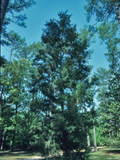
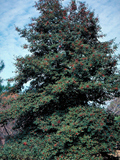
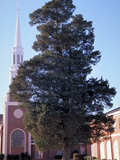
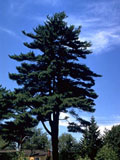
Here are some candidate tall evergreens that are native to Connecticut:Chamaecyparis thyoides (Atlantic white cedar) 40 to 75 feet with medium growth rate
Ilex opaca (American holly) 25 to 65 feet, but slow-growing
Juniperus virginiana (eastern redcedar) 30 to 90 feet with moderate growth rate
Pinus strobus (eastern white pine) to more than 100 feet with fast growth
Picea glauca (white spruce) up to 100 feet and medium growth rate, photos from Vanderbilt University
Pinus resinosa (red pine) up to 100 feet and medium growth rate, photos from Vanderbilt University
Pinus rigida (pitch pine) up to 100 feet, medium growth rate, photos from Duke University
Picea rubens (red spruce) up to 100 feet, slow to medium growth, photos from Virginia Tech
Tsuga canadensis (eastern hemlock) up to 100 feet, slow to medium growth rate
You will need to check the "Growing Conditions" area on each species home page to see if they meet the conditions at your site. I don't know how close the trees will be to the power lines, but you need to keep in mind that power companies usually have the right to trim trees away from their lines if they are perceived to pose a threat to the lines, so plant the trees so that there is plenty of room between them and the power lines.
More Trees Questions
Pruning smoketree in New Jersey
May 29, 2009 - How far from ground level do I prune a relatively young Smoke tree to get the bush effect?
view the full question and answer
Replacement for trees destroyed by Hurricane Ike
March 28, 2009 - We had a 23 year old elm tree in our front yard that was uprooted from Hurricane Ike (about 50 feet tall)..can you tell us what the replacement costs for that would be? Also we had a 20 foot live oak ...
view the full question and answer
Tree for St Paul MN
April 30, 2012 - Need deciduous faster growing shade tree, more taproot style (few/no surface bulging roots--had to cut down large silver maple), few/no fatal pests, tolerant of cold (MN), preferably able to take vari...
view the full question and answer
Evergreen ornamental tree choice in northern Indiana
June 10, 2009 - Can you please advise on growing Lemon Cypress trees outdoors in zones 5/6 zip code 46311
view the full question and answer
Decline of indoor lemon cypress
June 25, 2008 - I received a lemon cypress as a gift. I have kept it indoors in bright light and tried to keep it moist. When I received the plant the foliage was soft and now it has become brittle and dry even tho...
view the full question and answer
| Support the Wildflower Center by Donating Online or Becoming a Member today. |