Native Plants

Q. Who is Mr. Smarty Plants?
A: There are those who suspect Wildflower Center volunteers are the culpable and capable culprits. Yet, others think staff members play some, albeit small, role. You can torture us with your plant questions, but we will never reveal the Green Guru's secret identity.

Did you know you can access the Native Plant Information Network with your web-enabled smartphone?

Ask Mr. Smarty Plants
Ask Mr. Smarty Plants is a free service provided by the staff and volunteers at the Lady Bird Johnson Wildflower Center.

rate this answer

Saturday - January 24, 2009
From: Dublin, TX
Region: Southwest
Topic: Groundcovers
Title: Ground cover for North Central Texas
Answered by: Nan Hampton
QUESTION:
I live in north central Texas. My backyard has very fine, powdery sand soil. The previous owners of the property let the grass die out and now every time it gets windy, the sand gets into our patio and in our window panes. What is the best ground cover for this area. The area is about 3,000 sq ft. I also have two medium outdoor dogs. I'm open to anything that will keep the dust down. Thanks DarinANSWER:
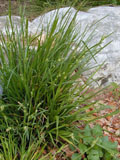
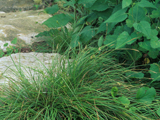
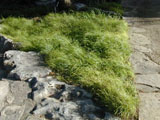
If most of your lawn is in the sun, then your best bet is Bouteloua dactyloides (buffalograss). It is a low-growing turf grass that requires infrequent mowing and very little water after it is established. Once it is established, its fibrous root system will anchor the soil and prevent sand blowing into your area. It does well in the sun, but not so well in shade. Please read our HOW TO ARTICLE, Native Lawns: Buffalograss, for more information on establishing a buffalograss lawn. You can combine the buffalograss with another low-growing grass, Bouteloua gracilis (blue grama). Native American Seeds in Junction offers a mixture of the two, Native Sun Turfgrass, for sale. They also have a useful article, Planting Tips for Native Grasses, on their website.Sedges (Carex spp.) also make good groundcovers. They are generally low-growing and some are evergreen. For information about using sedges as a groundcover lawn, please read Sedge Lawns for Every Landscape by John Greenlee. Here are a few recommended sedges:
Carex blanda (eastern woodland sedge)
Carex cherokeensis (Cherokee sedge)
Carex planostachys (cedar sedge)
Here are some other low-growing plants that could also be used in your area as groundcover along with, or instead of, the grasses and sedges:
Artemisia ludoviciana (white sagebrush)
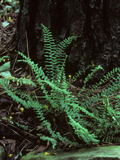
Asplenium platyneuron (ebony spleenwort) for shady areas
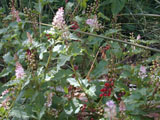
Calyptocarpus vialis (straggler daisy)
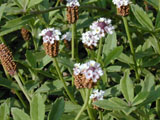
Phyla nodiflora (turkey tangle fogfruit)


More Groundcovers Questions
Need suggestions for groundcover in between flagstones in patio in Sugarland, TX.
July 05, 2011 - We are looking for a ground cover to plant in between our flagstone on our courtyard patio. The courtyard is full sun and we currently have a crushed rock-like substance in between the pieces. I thou...
view the full question and answer
Specifications for a property in Corning CA
March 29, 2012 - Drought resistant, deer resistant, low growing (ground cover), and shade tolerant request:
I am looking for a variety of species that not only fit the above preferences, but also a few other things. ...
view the full question and answer
Plants for difficult site in Jacksonville, TX
July 07, 2010 - East Texas (Cherokee County) red clay hillside, hard-packed, difficult to get to, 40' of it slopes 4' down in about 6'! Another 30' of it is flat. Between the hillside and the flat clay area is a...
view the full question and answer
Native plants for groundcover under Magnolia in Austin
April 09, 2009 - What plants native to the Austin, Tx area will do well underneath a large magnolia tree (instead of the English ivy that is there)?
view the full question and answer
Benefits of Habiturf from Austin
August 19, 2013 - I have been reading about Habiturf and my question should be easy to answer. Is this is a grass you would recommend for kid play? Sitting on the lawn, kicking a soccer ball, etc.
Any information a...
view the full question and answer
| Support the Wildflower Center by Donating Online or Becoming a Member today. |