Native Plants

Q. Who is Mr. Smarty Plants?
A: There are those who suspect Wildflower Center volunteers are the culpable and capable culprits. Yet, others think staff members play some, albeit small, role. You can torture us with your plant questions, but we will never reveal the Green Guru's secret identity.

Did you know you can access the Native Plant Information Network with your web-enabled smartphone?

Ask Mr. Smarty Plants
Ask Mr. Smarty Plants is a free service provided by the staff and volunteers at the Lady Bird Johnson Wildflower Center.

rate this answer

Thursday - December 18, 2008
From: Abilene, TX
Region: Southwest
Topic: Propagation
Title: Proper method of scattering bluebonnet seeds
Answered by: Barbara Medford
QUESTION:
I scattered about 20 lbs of bluebonnet seeds during various times this past fall season. I have read that it is a must to plant the seeds about an 1/8" of an inch into the ground rather than surface sow them in fear that the birds will get to them. My question is, since Mother Nature surface sows the Bluebonnet seeds during the spring time, why is it that the birds don't get to them then? Thanks !ANSWER:
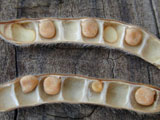
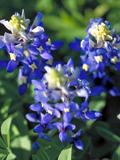
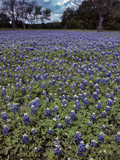
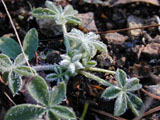
Because there is no perfect way to sow seeds to prevent damage by insects, being eaten by birds, being blown to inhospitable dirt (like pavement), or too much/too little water most plants make LOTS of seeds, and bluebonnets are no exception. The mother plant doesn't carefully select the right place and then tenderly rake them in, she just lets 'em go. We have no figures on what percentage of seeds actually make it from the seed pod to the point of becoming another full-grown plant, but it's probably not very large. The thing is, Nature has very kindly provided our beautiful bluebonnets, and all the other plants that grow from seeds in the world, survival tactics. They can hunker down in the soil, and wait years for the right conditions to appear. They can become food for animals and birds, thus helping them to survive. They can hide in the grass from predators, blending in to the soil, "disappearing" from sight, or they may prove never to have been viable, no matter how protected and perfectly planted they have been. Some processes we just can't control. Read our How-To Article How to Grow Bluebonnets for some more suggestions on propagation of the Texas state flower.
More Propagation Questions
Seeding success with Penstemon cobaea from Austin
June 18, 2013 - I've never had much luck in harvesting seeds from foxgloves (Penstemon cobaea, I think). Whenever I open the seed casing, the seeds inside are covered with some kind of mold. What's going on, and ho...
view the full question and answer
Failure to bloom of one of two Texas persimmons from Wimberly TX
May 04, 2013 - Last year my son planted two texas persimmon trees. One is blooming ok this year and the other is not. It does not seem dead. What can I do or is is in fact dying?
view the full question and answer
Propagation of Jack in the Pulpit in Lansing MI
April 18, 2010 - I just received some Jack in The Pulpit corms. Which way is up; does the pointy thing go up or down?
Thank you.
view the full question and answer
Growing Florist Roses
January 23, 2016 - Often I find that florist roses sprout for me, but I fail to get them to grow into a bush. Do you have the answer?
view the full question and answer
Propagation of Simsia calva from Albuquerque NM
January 27, 2014 - Hi - I was given some simsia calva seed from the LBJ wildflower center. It doesn't have a lot of info about starting the seeds, so any help is much appreciated! I tried starting some outdoors last ye...
view the full question and answer
| Support the Wildflower Center by Donating Online or Becoming a Member today. |