Native Plants

Q. Who is Mr. Smarty Plants?
A: There are those who suspect Wildflower Center volunteers are the culpable and capable culprits. Yet, others think staff members play some, albeit small, role. You can torture us with your plant questions, but we will never reveal the Green Guru's secret identity.

Did you know you can access the Native Plant Information Network with your web-enabled smartphone?

Ask Mr. Smarty Plants
Ask Mr. Smarty Plants is a free service provided by the staff and volunteers at the Lady Bird Johnson Wildflower Center.

rate this answer

Saturday - November 15, 2008
From: Spicewood, TX
Region: Southwest
Topic: Compost and Mulch, Propagation, Seeds and Seeding
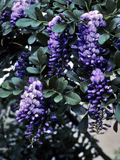
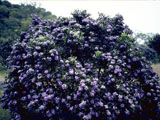
Title: Information about growing mountain laurels (Sophora secundiflora)
Answered by: Nan Hampton and Sean Watson
QUESTION:
I live just outside of Austin on 10 acres. I have several very large mountain laurels on my property that I planted from containers. Mine flower profusely every year. I feed them bi-weekly and water them as needed. Since I have great flowers every year, I have great seed-pods every year (about 5000 seeds/year from these three)and I have planted the seeds around my property and have many small ones growing now. I am thinking of mass growing them in containers to sell to those who love them as much as I do. Can you give me your input as to what I should use for the soil in the containers? What should the PH level be of the soil? And what other advice would you give for this kind of endeavor? I have always fed mine with Miracle Grow and the flower results and growth of them has been incredible. They were about 2' tall and 1' wide when I planted them 6 years ago and they are now about 10' tall and 6' - 8' wide. They are planted in raised beds and I only water them in extended dry times other than the feeding that I do with the Miracle Grow which I do about every two weeks during spring and summer. They get full sun for about 6 hours a day and partial sun the rest of the day however, the ones that I grow in containers would get full sun as the area that I would have them has few trees to shade them.ANSWER:
First of all, it sounds like you are doing a great job with your Sophora secundiflora (Texas mountain-laurel) plants. We do have several suggestions, however.
1. Instead of starting your plants in a raised bed, we suggest that you start your seeds in pots. The seedlings do not usually transplant very well from beds because of the long tap root that develops.
2. We usually nick the seeds on a stone grinder (you can nick them with a sharp knife) before they are sown so that they germinate quickly and at a much higher rate.
3. The potting soil we use is a locally produced container mix (basically a good compost with pecan hulls to give it texture and keep the soil from compacting).
4. Compost contains a good organic fertilizer start (natural nitrogen) and incorporates fertilizers better since the soil is living. However, you will get better results if you use a natural organic plant food rather than an inorganic fertilizer. Inorganic fertilizers can cause salt burn after prolonged use (salts build up in the soil). The salt can kill beneficial organisms in the soil as well as burn plants. Your fertilizing regime seems good, but you may be able to fertilize less if you use compost. You will surely get better results if you use a well draining compost either way. If you get a heavier compost, you can cut it with sand at about 25% sand to increase drainage.
For further information about growing mountain laurels we suggest you read about them in Jill Noke's How to Grow Native Plants of Texas and the Southwest—for sale at most book stores and probably available at your local library. She recommends growing the seedlings in 30% shade for the first spring and summer. She says that seedlings grown in full sun tend to expend most of their energy on root growth and form low compact shoot growth to protect themselves from burning. In the wild seedlings are found growing underneath parent trees or in the shade of other trees.
Best of luck with your project!
More Compost and Mulch Questions
Submerged paving under lawn
September 07, 2008 - I had 4 patches of rectangular areas (about 4'x6'or more) in my lawn where the grass is fine in spring but totally dies in summer. I decided to till these bare patches so that grass may grow better...
view the full question and answer
Suitability of Carolina Cherry Laurel for Bulverde TX
October 24, 2012 - The local Home Depot is selling Carolina Cherry Laurel Trees. They look beautiful. Is this a good tree for Bulverde TX..20 miles north of San Antonio? Can it survive? Will it be a high maintenance...
view the full question and answer
Blackfoot daisy turning brown in Round Rock, TX
September 30, 2009 - A few days ago, our blackfoot daisy was doing wonderfully. Then we got heavy rains and suddenly the plant is sere and brown. Did the too wet weather do this, and will it come back next year?
view the full question and answer
Coffee grounds as mulch into vegetable beds
February 05, 2009 - Can you put too much coffee grounds as mulch into vegetable beds?
view the full question and answer
Fast-growing vine for cinder block wall in Albuquerque
July 26, 2010 - I live in Albuquerque, N.M. and have a cement/cinder block wall and was wondering if there is a vine I can plant which will be easy to grow, grow fast and cover my wall without any type of help like a...
view the full question and answer
| Support the Wildflower Center by Donating Online or Becoming a Member today. |