Native Plants

Q. Who is Mr. Smarty Plants?
A: There are those who suspect Wildflower Center volunteers are the culpable and capable culprits. Yet, others think staff members play some, albeit small, role. You can torture us with your plant questions, but we will never reveal the Green Guru's secret identity.

Did you know you can access the Native Plant Information Network with your web-enabled smartphone?

Ask Mr. Smarty Plants
Ask Mr. Smarty Plants is a free service provided by the staff and volunteers at the Lady Bird Johnson Wildflower Center.

rate this answer

Thursday - October 16, 2008
From: Minford, OH
Region: Mid-Atlantic
Topic: Grasses or Grass-like
Title: Grasses for sloped clay hillside in Ohio
Answered by: Barbara Medford
QUESTION:
I have built a new home located on a hillside, our soil has a tremendous amount of clay in it. We have a sloped hillside that flows within 25 feet to the back door. The area is wooded and therefore shady. Should I plant the Kentucky 31/ Fescue grass on this hillside or should I go with something different to keep from erosion problems? Please advise which planting would be most beneficial and what type of plant recommended for our region. ThanksANSWER:
Fescue is not a native to North America, but was imported to the United States from Europe in the 1800's. At the Lady Bird Johnson Wildflower Center, we specialize in plants native to North America and to the area in which they are being grown. Plants already adapted to an area will require less water, fertilizer and maintenance. For general information on Fescue, of which Kentucky 31 is no doubt a named cultivar, see this article by Richard L. Duble, Turfgrass Specialist, Texas Cooperative Extension, Tall Fescue.
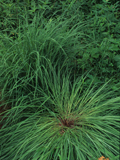
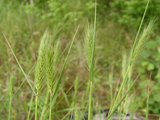
We would prefer to recommend native grasses for your shaded, clay slope. Their fibrous roots will help prevent erosion. We went to our Recommended Species section, clicked on Ohio on the map, and then used the Narrow Your Search function to indicate grass or grass-like for the Habit, and part shade for Light Requirement. We got a list of six grasses that are all perennial, and all will tolerate clay very well. You can follow the links to our webpage on each grass, which will have propagation information, projected height, etc. For further information on each grass, go to the bottom of the webpage and click on the link to Google on that plant. When you have selected a grass or grasses for your area, you can go to our Native Plant Suppliers section, type your town and state into the "Enter Search Location" box, and you will get a list of native plant nurseries, seed suppliers and landscape consultants in your general area, all with contact information.
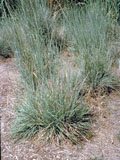
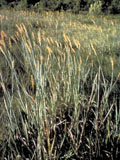
Andropogon gerardii (big bluestem)
Bouteloua curtipendula (sideoats grama)
Elymus canadensis (Canada wildrye)
Panicum virgatum (switchgrass)
Schizachyrium scoparium (little bluestem)
Sorghastrum nutans (Indiangrass)
More Grasses or Grass-like Questions
Native grasses for South Texas Coast
April 02, 2010 - Grasses S. Texas Coast.
Hello! I love all of the information available in your database Mr. Smarty Plants database (as well as the rest of the site) and find it quite useful on many fronts.
My...
view the full question and answer
Native grasses to replace mondo grass in California
March 30, 2009 - Hello -
I live in the Southern California coastal zone, and am looking for a drought resistant, turf alternative. My husband wants to use "Mondo Grass", but I know that is not native to the regi...
view the full question and answer
Evergreen native replacement for liriope
July 13, 2008 - What is a good native replacement for Liriope that is evergreen?
view the full question and answer
Growing grasses under juniper trees (Juniperus ashei)
October 29, 2008 - Mr. Smarty Plants,
Yesterday, I attended the plant sale at the Wildflower Center. I purchased cupgrass and switchgrass seeds only to discover the grasses may need more water than I am willing to u...
view the full question and answer
Plantings for sides of retention pond in Willits CA
July 02, 2012 - I am looking for recommendations for ground cover for the outside of embankments which impound wastewater. This is to improve the aesthetics and deter weeds. The slopes are 1V:2H, so if we can avoid...
view the full question and answer
| Support the Wildflower Center by Donating Online or Becoming a Member today. |