Native Plants

Q. Who is Mr. Smarty Plants?
A: There are those who suspect Wildflower Center volunteers are the culpable and capable culprits. Yet, others think staff members play some, albeit small, role. You can torture us with your plant questions, but we will never reveal the Green Guru's secret identity.

Did you know you can access the Native Plant Information Network with your web-enabled smartphone?

Ask Mr. Smarty Plants
Ask Mr. Smarty Plants is a free service provided by the staff and volunteers at the Lady Bird Johnson Wildflower Center.

rate this answer

Saturday - September 13, 2008
From: Valdez, NM
Region: Southwest
Topic: Shrubs
Title: Planting shrubs on a rocky slope
Answered by: Nan Hampton
QUESTION:
I need to plant a rocky slope, facing south and west, to cut down erosion. Other than creating terraces, are there tricks for securing individual shrubs or trees to a slope when planting? What plants to you recommend for zone 4 (near Taos Ski Valley) at 7,500 ft.? I'm assuming the native ones like chamisa, sage brush, Apache plume, but others, too? Thanks! HelgaANSWER:
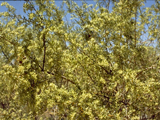
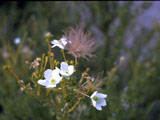
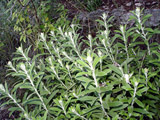
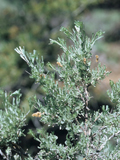
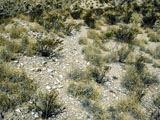
Planting on a rocky slope is tricky. First, you are better off if you use shrubs that have meshed or intertwining roots rather than a tap root. This type of root system is going to hold on to the soil better on the slope than plants with tap roots. Mr. Smarty Plants found a forum, "Planting shrubs on a hillside", on GardenWeb with several useful suggestions. These include planting the shrubs in a plastic pot with the bottom removed. The pot on the upside of the slope won't be visible and the edge of the pot on the downside of the slope will hold the soil and the roots in place until the plant is established. You can then remove the visible plastic pot. Another suggestion was to use plastic edging on the downslope side of the planting and fill with soil. The plastic edging can be removed once the plant is established. Still a more natural setting could be accomplished by making a small rock wall on the downslope side and filling it with soil. It could be left in place or removed after the plant is established.The three plants you mentioned—Atriplex canescens (chamiso), Fallugia paradoxa (Apache plume) and the sagebrushes, Artemisia frigida (prairie sagewort), Artemisia ludoviciana (white sagebrush), Artemisia tridentata (big sagebrush)—are all good choices.
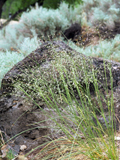
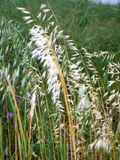
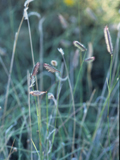
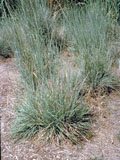
You might also consider using various grasses. Grasses are great plants for controlling erosion since they have extensive fibrous root systems. Here are a few suggestions for grasses:
Achnatherum hymenoides (Indian ricegrass)
Bouteloua curtipendula (sideoats grama)Bouteloua gracilis (blue grama)
Schizachyrium scoparium (little bluestem)
Sporobolus airoides (alkali sacaton)
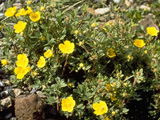
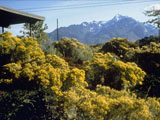
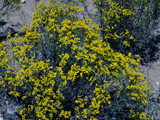
Here are more small shrubs that would do well on your rocky slope:
Cercocarpus montanus (alderleaf mountain mahogany)
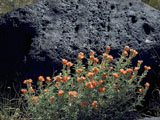
Dasiphora fruticosa ssp. floribunda (shrubby cinquefoil)
Ericameria nauseosa ssp. nauseosa var. nauseosa (rubber rabbitbrush)
Gutierrezia sarothrae (broom snakeweed)
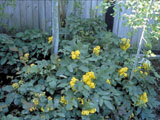
Mahonia repens (creeping barberry)
Rhus trilobata (skunkbush sumac) and photos and more information


More Shrubs Questions
Cake decorations with flowers
February 25, 2009 - Can I decorate a cake with bluebonnets, lavender or mountain laurel blooms?
view the full question and answer
Landscaping for slope in Kansas City
October 08, 2008 - We have a down sloping back yard and patio on the lower area. We need some water absorbing plants near the foundation and some in the front of the house, where water isn't a problem. We are allergic ...
view the full question and answer
Shaping cenizo in Duncanville TX
October 02, 2009 - Our Silverado Sage, which we expected to be 4' to 5' high and wide based on the label when we purchased it about 10 years ago, is nearly 7' tall and very random in shape (not the evenly rounded sha...
view the full question and answer
Removing Texas cedar Juniperus ashei from Blanco River banks
February 26, 2014 - Dear Mr. Smarty Plants,
Should cedar trees be removed from our Blanco River banks to prevent them from sucking too much of our precious water before it makes it into the river system?
If so, what s...
view the full question and answer
Groundcover for a Sunny, Steep Slope in Maryland
April 29, 2013 - I need a groundcover for a sunny dry steep slope in Towson, Maryland. The slope goes from the parking lot down to a deck area.
view the full question and answer
| Support the Wildflower Center by Donating Online or Becoming a Member today. |