Native Plants

Q. Who is Mr. Smarty Plants?
A: There are those who suspect Wildflower Center volunteers are the culpable and capable culprits. Yet, others think staff members play some, albeit small, role. You can torture us with your plant questions, but we will never reveal the Green Guru's secret identity.
Did you know you can access the Native Plant Information Network with your web-enabled smartphone?

Ask Mr. Smarty Plants
Ask Mr. Smarty Plants is a free service provided by the staff and volunteers at the Lady Bird Johnson Wildflower Center.

rate this answer

Tuesday - August 05, 2008
From: Austin, TX
Region: Southwest
Topic: Diseases and Disorders
Title: Loss of leaves on yaupon in Austin
Answered by: Barbara Medford
QUESTION:
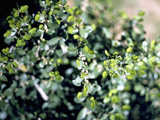
Last winter I planted a Pride of Houston yaupon. Currently, the leaves at the tips of its stems are green and healthy, but the leaves along the stems are turning dark brown and falling off. Does it need more water?ANSWER:
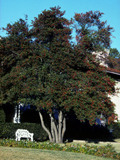
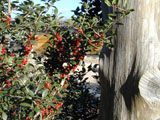
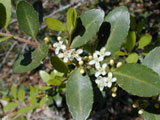
This one is a bit of a puzzle. Ordinarily, we think of Ilex vomitoria (yaupon) as being the Iron Man of plants, able to live and prosper in shade, sun, dry, wet. The research we did confirmed that, including that it tolerated most soils and even salt spray, which, of course, is not a threat in Austin. This USDA Forest Service website on Ilex vomitoria lists possible pests as being scale, leaf miners, mites and aphids, but said none are considered a threat to the long-term health of the plant. And if there were some insect or disease, you would think it would affect the leaves on the ends of the twigs as well as those in the center. You didn't say what sun exposure your plant has, but one clue we got was that the crown tended to thin out when there was not enough sun, and it had denser foliage when grown in the sun. So, because we really can't come up with anything else, and because this has been a fierce summer with a whole lot of heat and almost no rain, we're going to suggest that you treat it as transplant shock. First, prune the top about 1/4 to 1/3, thus opening the interior up to more sun and possibly better air circulation. Leave as many green leaves as possible for nutrition. Mulch the roots with a shredded hardwood mulch, which will conserve moisture, keep the roots cooler and eventually decompose to improve the texture of the soil. Now, water. Stick a hose down in the soil around the roots and let it slowly dribble until water appears on the surface. Do this every other day or so. If it begins to improve and perk up, then you can try a little balanced fertilizer, but not until it's doing better. Stressed plants can't take fertilizer.
More Diseases and Disorders Questions
More trees to go with live oaks in Schertz TX
July 13, 2010 - We moved to a new house that has two recently planted live oak trees. Other than those two little trees there is nothing else on the property. Because of what I read about the oak wilt I would like ...
view the full question and answer
Leaf browning problem on unidentified plant from Batesville MS
October 01, 2013 - Have a night series plant that is all of a sudden the leaves on the ends are turning dark brown and eventually back to the stalk. I flushes good and cut off dead parts and it continues. Any ideas? it ...
view the full question and answer
Yellowing foliage on a lemon cypress from St. Charles MO
May 22, 2011 - I recently received a lemon cypress tree as a gift. After about a month we transplanted it outside and the foliage turned from a light green to a yellow color. Is this normal? The tree doesn't app...
view the full question and answer
Oak trees shedding leaves in Denton TX
May 27, 2012 - In Denton, TX we have two mature Quercus buckleyi. It is May 11th 2012 and one of these trees has been shedding green leaves for the last week. The only changes we have made are: planted English ivy...
view the full question and answer
Death of mature tulip tree in Raymond IL
June 06, 2010 - We have a mature tulip tree that leafed out and looked very healthy then all of the leaves turned brown and fell off. I think the tree is now dead. We live in the country and have a corn field behind ...
view the full question and answer
| Support the Wildflower Center by Donating Online or Becoming a Member today. |