Native Plants

Q. Who is Mr. Smarty Plants?
A: There are those who suspect Wildflower Center volunteers are the culpable and capable culprits. Yet, others think staff members play some, albeit small, role. You can torture us with your plant questions, but we will never reveal the Green Guru's secret identity.

Did you know you can access the Native Plant Information Network with your web-enabled smartphone?

Ask Mr. Smarty Plants
Ask Mr. Smarty Plants is a free service provided by the staff and volunteers at the Lady Bird Johnson Wildflower Center.

rate this answer

Wednesday - July 02, 2008
From: Italy, TX
Region: Southwest
Topic: Transplants, Wildflowers
Title: Transplanting native bluebells in Texas
Answered by: Barbara Medford
QUESTION:
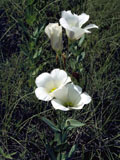
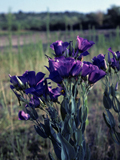
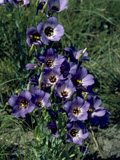
Hello Smarty, Italy TX here again! Your advice on crape myrtles has inspired me to try harder, but now I have a question about a TRUE native wildflower,the Texas Bluebell, growing in my pasture. I can't believe they are growing. We've had NO RAIN for nearly 2 months. Our corn is already drying up. So, I want to know how I can transplant some bluebells into my wildflower patch in my yard. I tried this before but I was not very careful with the roots. Also, are bluebells one of those flowers that has no pattern of when or where it will appear? Some of the fields I've seen in previous years were lush with the purple (and some white!) flowers, but this year the field is bare.BUT I have some in my pasture where I've never had any growing before.How does that work?ANSWER:
According to our Native Plant Database, Eustoma exaltatum ssp. russellianum (showy prairie gentian) is best propagated by seed. Unfortunately, the seed is about the size of black pepper, and slow to germinate. There are propagation instructions on the webpage we have linked you to. In terms of transplant, we have always suspected that this is a soil specific plant, because it seems to come back in the wild only in certain patches. However, we also noticed (in Brenham, the home of you-know-what ice cream) that it tended to grow in the sides of ditches, where more moisture, and perhaps some shelter from sun and wind, were available. You are very fortunate to have wild stands of this flower, as it seems to be growing more rare in the wild, and the plants that can be purchased often don't survive, either. We would suggest that, with patience, you might try propagating by seed. In addition, study the conditions and the type of soil your wild bluebells are in, and try to emulate them in your garden.

More Transplants Questions
Brown leaves on possumhaw holly in Grandview TX
July 02, 2009 - What would be likely causes for brown leaves on possumhaw holly? We have 2, one was planted in spring 2008, and a slightly larger one planted late winter/early spring this year. Most of the leaves a...
view the full question and answer
Failure to thrive of non-native Purple Orchid Tree
March 09, 2009 - We planted purple orchid tree Texas,zone 9 two weeks ago and all leaves turned brown.My husband used root stimulator with enough water as the instructions said.We took all brown leaves off and now it...
view the full question and answer
Volunteer bluebonnets in Farmville VA
May 17, 2010 - I have two small Texas bluebonnet plants that came with no instructions as to how to plant them regarding soil or sun. Everything I read has to do with seeds, can you please help me?
Thank you.
view the full question and answer
Growing Sophora gypsophila from seed
April 23, 2008 - Sophora gypsophila B.L. Turner & Powell
Do you have any information on growing this small tree from seed? I have a few seeds and would like to try. What conditions break seed dormancy? I have grown ...
view the full question and answer
Should I purchase wax myrtle plants as liners or pots
July 18, 2011 - I want to buy some wax myrtle over internet.Place has wax myrtle "liners" They look very thin. Will these bushes grow quickly or should I spend more $ for 1 gallon plants. Just need a hedge fairly q...
view the full question and answer
| Support the Wildflower Center by Donating Online or Becoming a Member today. |