Native Plants

Q. Who is Mr. Smarty Plants?
A: There are those who suspect Wildflower Center volunteers are the culpable and capable culprits. Yet, others think staff members play some, albeit small, role. You can torture us with your plant questions, but we will never reveal the Green Guru's secret identity.
Did you know you can access the Native Plant Information Network with your web-enabled smartphone?

Ask Mr. Smarty Plants
Ask Mr. Smarty Plants is a free service provided by the staff and volunteers at the Lady Bird Johnson Wildflower Center.

rate this answer

Wednesday - June 25, 2008
From: Atlanta, TX
Region: Southwest
Topic: Propagation
Title: Possibility of propagating buckeye from basal shoots
Answered by: Barbara Medford
QUESTION:
I have a beautiful red buckeye tree that has small shoots coming up at the base. I would love to share these with my friends. How do I do this?ANSWER:
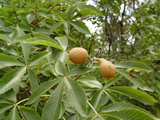
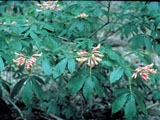
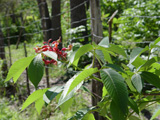
Aesculus pavia (red buckeye) is a lovely bush or small tree, and you are to be commended for wanting to share it with friends. It grows especially well in your part of East Texas. You should be warned that both the seeds and small sprouts are poisonous. They propagate very easily from seed. The recommendations we saw said that placing a seed, while it was still fresh, on its side on the dirt would give the best results. Most of the initial growth spurt is focused on creating a very long tap root. If you think your sprouts are from seeds, you must dig deep to get them out to transplant, so you will not break that taproot. And, again because of the taproot, be sure that where you put the seed is where you want the plant.
The sprouts you are asking about will not live well since they are probably from the main root system of the parent tree. If they were dug up with the roots this would damage the existing tree. Now if these are from seed they can be dug up and transplanted by digging soil with them and planting them into a hole twice the size of the rootball that was dug up. But it sounds like these are root sprouts and therefore should just be cut off.

More Propagation Questions
Cultivation of Gossypium hirsutum, Upland Cotton
February 08, 2006 - I got a cotton boll (seeds and all) at a spinning workshop. I spun the cotton and the lady who brought the cotton boles said the seeds could be planted and the plant could be grown in a container on ...
view the full question and answer
Seed collection from rain lilies
May 14, 2008 - Hello, I have some rain lilies growing in our yard. I've collected some seed heads, but am not sure what steps to take now. They were all off of broken stems (the dogs are not as cautious as I am...
view the full question and answer
Different colors of Argemone spp. from McAllen TX
March 16, 2014 - I took pictures of at least 5 colors of pricklepoppy today. Is this common to have so many colors in one area? How do I harvest the seedpods and when is the best time to do so?
view the full question and answer
Propagating a Magnolia tree from a twig cutting in New Hampshire.
November 02, 2011 - I have a twig cutting from a rare magnolia tree I found on a farm in central New Hampshire. The tree seems to be at least one hundred years old. It was in full bloom in late August and I was told by t...
view the full question and answer
Blooming but not berrying American bittersweet from Pendleton IN
May 29, 2013 - I have had a bittersweet plant for years, it blooms but not berries. How do I tell if it is male or female so I can buy the opposite? It is currently blooming.
view the full question and answer
| Support the Wildflower Center by Donating Online or Becoming a Member today. |