Native Plants

Q. Who is Mr. Smarty Plants?
A: There are those who suspect Wildflower Center volunteers are the culpable and capable culprits. Yet, others think staff members play some, albeit small, role. You can torture us with your plant questions, but we will never reveal the Green Guru's secret identity.
Did you know you can access the Native Plant Information Network with your web-enabled smartphone?
Ask Mr. Smarty Plants
Ask Mr. Smarty Plants is a free service provided by the staff and volunteers at the Lady Bird Johnson Wildflower Center.

rate this answer

Tuesday - May 27, 2008
From: Floral Park, NY
Region: Northeast
Topic: Privacy Screening
Title: Evergreen screening shrubs for New York
Answered by: Nan Hampton
QUESTION:
I need evergreen screening shrubs that aren't too deep. The shrubs are to be planted along an existing wrought iron fence, which is a few feet behind a children's swing set.ANSWER:
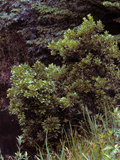
We are rather limited in the native evergreen shrubs that will be a good choice near a children's play area, but here are a couple:Ilex glabra (inkberry). You can read more about several of the cultivars. Although generally a rounded shrub, it can be pruned to shape it to your space. Here is more information from Ohio State University.
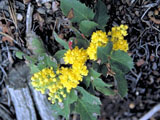
Mahonia aquifolium (hollyleaved barberry). You can find information for several of the cultivars from the University of Connecticut and more information from Virginia Tech. This plant does have leaves that are spiny so it might not be ideal for your area with small children.
Leucothoe fontanesiana (highland doghobble)
Kalmia spp.
Rhododendron spp.
You find information about poisonous plants in Poisonous Plants of North Carolina and Cornell University Poisonous Plants Informational Database.
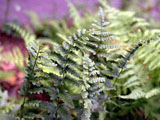
As an alternative to an evergreen shrub you might consider ferns that are evergreen and reasonably tall. Here are a few suggestions:
Dryopteris cristata (crested woodfern)


More Privacy Screening Questions
Native Texas shrub for privacy screen in hot area
August 31, 2007 - Dear Mr. Smarty Plants,
I have a lot facing dead west which I'm sure you can understand is brutally hot in the summer. I'm putting in a pool in my backyard and would like to plant a native Texas...
view the full question and answer
Privacy screen around pool in Vermont
February 08, 2009 - I am looking for a plant or tree that doesn't lose its leaves or needles that can offer privacy around my pool but not grow tall enough to block out the sun in the early and late hours. Would an ever...
view the full question and answer
Recommendations for a 700 ft. noise and privacy barrier in Georgia
January 06, 2009 - Need recommendation for a fast growing, non-invasive native plant for a 700' barrier (noise & privacy) in wooded area; the area is mostly hardwood with some pine, and a good understory is established...
view the full question and answer
Vines to Cover Brush Pile in Maryland
April 29, 2013 - We have a large brush pile on our property that we'd intended to burn, but it is big enough now that it would require the help of the fire department! I'm thinking I'd like to cover it with native ...
view the full question and answer
Vine for Chain Link Fence in Virginia
March 25, 2015 - I am from Great Falls, Virginia. I would like to know what the best vine is to grow on aluminum fences to cover them up quickly but also doesn't damage expensive fences in a long term?
view the full question and answer
| Support the Wildflower Center by Donating Online or Becoming a Member today. |