Native Plants
Q. Who is Mr. Smarty Plants?
A: There are those who suspect Wildflower Center volunteers are the culpable and capable culprits. Yet, others think staff members play some, albeit small, role. You can torture us with your plant questions, but we will never reveal the Green Guru's secret identity.
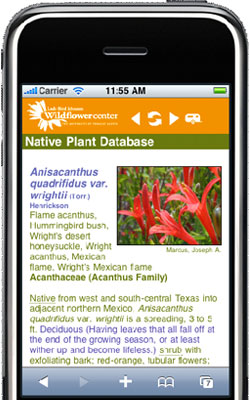
Did you know you can access the Native Plant Information Network with your web-enabled smartphone?

Ask Mr. Smarty Plants
Ask Mr. Smarty Plants is a free service provided by the staff and volunteers at the Lady Bird Johnson Wildflower Center.

rate this answer

Monday - April 14, 2008
From: Madison, OH
Region: Northeast
Topic: Transplants, Watering, Grasses or Grass-like, Herbs/Forbs, Shrubs, Trees
Title: Native plants for sandy soil and not much water
Answered by: Barbara Medford
QUESTION:
I am planning a new garden at home and would like to grow native plants that can handle sandy soil and don't need much water. I do not water my gardens.I would prefer plants that can have more than one season of interest.ANSWER:
We will definitely give you some suggestions for the types of plants you're looking for. But first, a couple of cautions about sandy soil and unwatered gardens. Sandy soil is very porous-water goes in and zips through on its way somewhere else. The opposite of that, of course, is clay soil that traps the water and can drown the poor hapless little plants.
When we garden on a piece of land, we don't get to pick the dirt, but we can amend it. And even that doesn't have to be done all at once. Mr. Smarty Plants is an advocate of composting, which not only helps to deliver nutrients to the plant, it helps the soil to be more hospitable to the roots. It disposes of yard wastes, as well as some kitchen waste, and gets to be kind of addictive, or at least it did for us. Here is a website A Complete Guide to Composting that not only gives you lots of good information, it links you to several other excellent sites on the same subject. For starters, you can buy compost (please, no peat moss) in bags at the garden store, but manufacturing your own will be much more satisfying.
Now, about the watering. We don't know how much average annual rainfall you get in Madison, Ohio, but we'll guarantee sometimes it's going to be too much and sometimes it's not going to be enough. Again, the compost helps out here, in that it will help hold the moisture in the soil so it doesn't go right out of the sand, and save that mosture for a non-rainy day. But, newly planted plants are going to need to be watered if it doesn't rain, no matter how little water they supposedly need to survive. They will suffer some transplant shock regardless, and those tiny little hair-like rootlets on the roots will need water readily available to pass on to the rest of the plant while it gets its act together. So, when you say you don't water your garden, do it while they get established, or kiss your investment, and the plants, goodbye.
Now, on to the Main Event. You didn't say which kinds of plants you were looking for, so we're going to our Recommended Species for Ohio, and choose some examples of flowering plants (herbs), shrubs, grasses, and trees. All will be perennial, so they don't have to be replanted every year, but they may die back, or at least drop their leaves, when the growing season is over. We will try to find some evergreen plants, or at least some with winter berries, in response to your request for interest in more than one season. We have just chosen samples of what is available, selecting for plants needing either sandy soil or well-drained soil. You can follow each plant link to a webpage that will give you more information, and down at the bottom of that page you will find a link to still more information from Google. To give yourself more choices, select "Recommended Species", select for Ohio, and whichever type of plant you are interested in.
HERBS
Anemone canadensis (Canadian anemone)
Conoclinium coelestinum (blue mistflower)
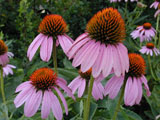
Echinacea purpurea (eastern purple coneflower)
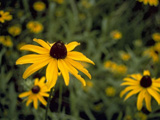
Rudbeckia laciniata (cutleaf coneflower)
SHRUBS
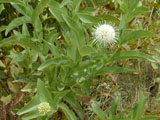
Cephalanthus occidentalis (common buttonbush)
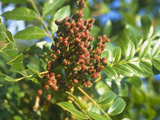
Rhus copallinum (winged sumac)
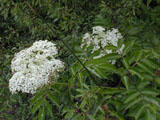
Sambucus nigra ssp. canadensis (common elderberry)
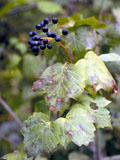
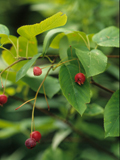
Viburnum acerifolium (mapleleaf viburnum)
GRASSES
Andropogon gerardii (big bluestem)
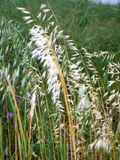
Bouteloua curtipendula (sideoats grama)
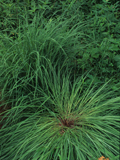
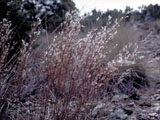
Schizachyrium scoparium (little bluestem)
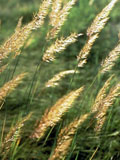
Sorghastrum nutans (Indiangrass)
TREES
Amelanchier laevis (Allegheny serviceberry)
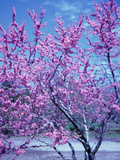
Cercis canadensis (eastern redbud)
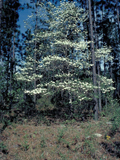
Cornus florida (flowering dogwood)
More Shrubs Questions
Plants to hide utility boxes
July 16, 2008 - What are suggestions for plants to plant around utilities boxes (3 of them clustered together) to effectively camouflage them but be attractive. We will outline a larger area in brick, plant evergree...
view the full question and answer
Erosion tolerant plants for shade from Kerrville TX
August 06, 2013 - We have just cleared a lot of cedar out of a small draw and would like to know the best groundcovers, shrubs, etc. to plant to hold the soil. Deep shade most of the day.
view the full question and answer
Hanging Baskets for Batson, TX
May 23, 2014 - What plants can I put in hanging baskets for my shady porch?
view the full question and answer
Are beautyberry bushes toxic to horses?
October 12, 2011 - Are beautyberry bushes toxic to horses?
view the full question and answer
Small native evergreen shrubs for North Carolina
May 17, 2007 - I live in zone 7 and need miniature shrub to go in flower bed situated in full sun. I love gardenias but afraid the intensity of the sun might be too much.
view the full question and answer
| Support the Wildflower Center by Donating Online or Becoming a Member today. |