Native Plants

Q. Who is Mr. Smarty Plants?
A: There are those who suspect Wildflower Center volunteers are the culpable and capable culprits. Yet, others think staff members play some, albeit small, role. You can torture us with your plant questions, but we will never reveal the Green Guru's secret identity.

Did you know you can access the Native Plant Information Network with your web-enabled smartphone?

Ask Mr. Smarty Plants
Ask Mr. Smarty Plants is a free service provided by the staff and volunteers at the Lady Bird Johnson Wildflower Center.

rate this answer

Saturday - March 29, 2008
From: Houston, TX
Region: Southwest
Topic: Diseases and Disorders
Title: Fasciation in Houston.
Answered by: Damon Waitt
QUESTION:
I live in Houston and have had a rather large flower garden for many years. Most of the flowers are just gorgeous but over the last two or three years I have noticed that occasionally some of the flowers spout out with deformed blossoms. White Shasta Daisy is one example. In totally different parts of the yard I have seen them spout with two yellow centers attached back to back with deformed white petals and the stalk is shaped like a ribbon instead of a stem. I don’t know what could cause that. Also, a few of my purple coneflowers have spouted with green petals instead of purple petals or with a mixture of green/purple petals. This year I noticed that some of my yellow wildflowers (sorry I don’t know the name) (it’s a yellow wildflower that bushes out and has many blossoms on one bush) anyway I noticed that even on the same bush, some of the blossoms have yellow petals and some have green petals and also some of the green petaled ones are deformed. Have you ever heard of this before? Thank you in advance for your opinion about what could possibly have cause this and what I can do to remedy it.ANSWER:
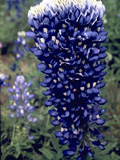
This sounds like a case of fasciation, a plant developmental anomaly in which it appears that stems, flowers, leaves and/or fruits have been fused. It is uncertain whether it is genetically determined or caused by disease or some other sort of trauma to the plant. It does appear that there may be an inheritable tendency toward fasciation that may be triggered by environmental conditions such as temperature, crowding, insect attack, disease or wounding of the plant. Some fasciation may be caused by bacterial or viral infections. Fasciation bacteria survive on infected plants and debris and they spread in water and through wounds. If bacteria is to blame, the solution is good sanitation and use of pathogen-free plants. The University of Californi Integrated Pest Management website reccomends you "Avoid injuring the base of plants, especially when plants are wet. Keep the base of plants dry. To control fasciation to all potential causes, do not propagate or graft symptomatic plants. Remove and dispose of infected plants, or prune and dispose of distorted tissue and do not proagate from those plants." Here is a photo of fasciation in Texas Bluebonnet.
More Diseases and Disorders Questions
Stressed live oaks from Lakeway TX
August 19, 2013 - I have some Live Oaks who appear to be stressed (Ball Moss is becoming very prevalent on some of them) during the drought in Central TX. How often and how long should I water them? Thank you very much...
view the full question and answer
Recovery of water-stressed Agarita
August 11, 2014 - Hello! I planted a small agarita at the end of May and then
left town for six weeks. During that time it was supposed to receive weekly deep irrigations to help it establish, but it seems that som...
view the full question and answer
Transplant shock in Achillea millefolium
May 28, 2007 - I had a clump of yarrow in my garden and was worried that it would become very aggressive to the other plants. I decided to transplant it into large clay pots to control it. Immediately after the tran...
view the full question and answer
Live oaks dropping brown leaves
August 02, 2014 - We have three live oaks and one of them has been dropping quite a few brown leaves over the past two weeks. I looked at pictures of trees with oak wilt and ours do not look like the pictures. I als...
view the full question and answer
Possible disease on Eastern Redbud
October 06, 2007 - Our Eastern Redbud appears to be suffering from our recent drought. The leaves are turning brown in July/August on a few branches. A few black spots appear on the leaves before they turn brown. Ot...
view the full question and answer
| Support the Wildflower Center by Donating Online or Becoming a Member today. |