Native Plants

Q. Who is Mr. Smarty Plants?
A: There are those who suspect Wildflower Center volunteers are the culpable and capable culprits. Yet, others think staff members play some, albeit small, role. You can torture us with your plant questions, but we will never reveal the Green Guru's secret identity.

Did you know you can access the Native Plant Information Network with your web-enabled smartphone?

Ask Mr. Smarty Plants
Ask Mr. Smarty Plants is a free service provided by the staff and volunteers at the Lady Bird Johnson Wildflower Center.

rate this answer

Wednesday - January 16, 2008
From: Milford, CT
Region: Northeast
Topic: Wildflowers
Title: The most common wildflower in North America
Answered by: Nan Hampton and Joe Marcus
QUESTION:
Hi Mr. Smartyplants, What the most common wildflower in North America? My friend thinks it's the oxeye daisy. Is this correct? I work for a puzzle publishing company, and am doing research for a themed puzzle. The puzzle is about wildflowers. Hope you can help! Debra in Milford, CTANSWER:
The answer depends on how you define the terms, "common" and "wildflower." Many of the most "common wildflowers"—that is, species commonly called wildflowers and occurring in all 48 contiguous states—are of Old World origin. Many are also considered weeds. Among them are Oxeye daisy (Leucanthemum vulgare), Bull thistle (Cirsium vulgare), Bachelor's buttons (Centaurea cyanus), Queen Anne's-lace (Daucus carota), Henbit (Lamium amplexicaule), Dandelion (Taraxacum officinale) and Shepherd's purse (Capsella bursa-pastoris) that all came from Europe or Asia.
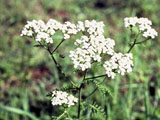
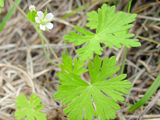
Native candidates that occur in all the "lower 48 states" (though all are not native to every state) are Common yarrow (Achillea millefolium), Carolina Crane's-bill (Geranium carolinianum), and Sleepy catchfly (Silene antirrhina).
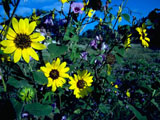
For our money, however, the two most common wildflowers (herbaceous native plants with showy flowers) are Blackeyed Susan (Rudbeckia hirta) and Common sunflower (Helianthus annuus). Both occur all across America and in many places occur in vast numbers.
Good luck with your puzzle and we hope it includes lots of native wildflowers.

More Wildflowers Questions
Using Native Plants Database to determine flowering time in Austin
April 07, 2006 - How can I access your data base to learn what plants are flowering in Austin during the months of October and early November?
view the full question and answer
Deer Resistant, Fast Growing Groundcover Suggestions for Georgia
April 20, 2013 - Our driveway is 1/4 mile in length and is steep on both sides (one side up one side down). It currently has grass that our contractor planted using seed when we built our house. We are unable to cut t...
view the full question and answer
Native wildflower garden for Pennsylvania
May 21, 2008 - Hello, I am interested in making a garden, and I would like to use only or mostly native wildflowers in it. Do you have any good suggestions for wildflowers that I can transplant from places where the...
view the full question and answer
Wildflowers for West Texas Permian Basin area
March 19, 2007 - What wild flowers grow out here in West Texas (Permian Basin Area)? I know a lot of the wild flowers from other parts of the state will not grow out here in the dry heat and poor soil.
Thanks for you...
view the full question and answer
Greenhouse bluebonnets for July wedding from Denver CO
August 19, 2013 - Would it possible for my daughter's florist to get bluebonnets for her late July wedding? Are they propagated in greenhouses?
view the full question and answer
| Support the Wildflower Center by Donating Online or Becoming a Member today. |