Native Plants

Q. Who is Mr. Smarty Plants?
A: There are those who suspect Wildflower Center volunteers are the culpable and capable culprits. Yet, others think staff members play some, albeit small, role. You can torture us with your plant questions, but we will never reveal the Green Guru's secret identity.

Did you know you can access the Native Plant Information Network with your web-enabled smartphone?

Ask Mr. Smarty Plants
Ask Mr. Smarty Plants is a free service provided by the staff and volunteers at the Lady Bird Johnson Wildflower Center.

rate this answer

Saturday - December 01, 2007
From: West Lake Hills, TX
Region: Southwest
Topic: Trees
Title: Native substitute for traditional Christmas tree
Answered by: Nan Hampton
QUESTION:
Could you give some recommendations for a substitute of the traditional Christmas tree used during the holiday season? The low light/humidity conditions in the home is a challenge under any circumstance but we would like to have something native to the Austin area that would help celebrate the season, yet be more environmentally responsibile than cutting a living tree and sending it to the mulch pile later. Maybe we can start new traditions!ANSWER:
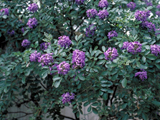
Since late fall/winter is the best time to plant new trees, why not go to your favorite nursery specializing in native plants—you can find a list in our National Suppliers Directory—and pick out one of our native evergreen shrubs/small trees and have yourself a living Christmas tree. You can maintain it inside covered with your favorite decorations and lights and then plant it outdoors as soon as Christmas is over. Here are several suggestions:Sophora secundiflora (Texas mountain-laurel). Of course, it won't have the beautiful flowers until spring.
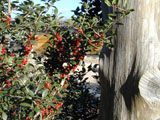
Ilex vomitoria (yaupon). You might be able to find one to purchase that is covered in red berries.
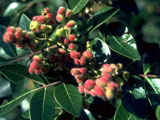
Rhus virens (evergreen sumac). Again, you might be able to find one covered with red berries, but it may be a little late for them.
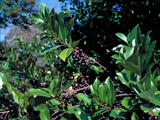
Prunus caroliniana (Carolina laurelcherry). The berries are blue and may be gone by now.
Leucophyllum frutescens (cenizo). You might find one in bloom.
Juniperus virginiana (eastern redcedar). If you find one with blue berries on it (a female tree), you will know that you aren't going to be spreading pollen for allergies.
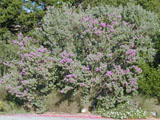
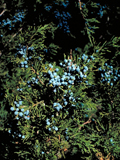
More Trees Questions
Controlling oak suckers in Austin
January 26, 2012 - I live in Austin TX and have one particular native Oak tree in my back yard with a large bed around it. I don't plan on planting anything else in the bed since it is already nicely landscaped along ...
view the full question and answer
Tree removal from Austin
November 18, 2013 - Unfortunately we need to cut down a Spanish oak (11" diameter, over 50 feet tall) that is leaning against our upper story deck (if it falls, the roof, deck, and steel supports may be crushed). A lim...
view the full question and answer
Annuals victims of allelopathy under a hackberry tree in Franklin TN
August 03, 2009 - In our new home's back yard we have a 30' hackberry tree that's less than 20' from our house, on the NW side. I planted your typical shade annuals, impatiens, etc., in the mulch bed under the tre...
view the full question and answer
Recommend native plants Florida
December 12, 2007 - I live in Fort Meyers Florida. Can you recommend some good native tress and shrubs for my landscape?
view the full question and answer
Willow Tree with Bark and Leaves Falling Off in Missouri
October 01, 2015 - My willow tree is suddenly lost leaves on 1/2 of the tree. The tree has 2 major trunks and the leaves that have fallen (all off within about 3 weeks) are on one trunk but the bark is impacted on both ...
view the full question and answer
| Support the Wildflower Center by Donating Online or Becoming a Member today. |