Native Plants

Q. Who is Mr. Smarty Plants?
A: There are those who suspect Wildflower Center volunteers are the culpable and capable culprits. Yet, others think staff members play some, albeit small, role. You can torture us with your plant questions, but we will never reveal the Green Guru's secret identity.

Did you know you can access the Native Plant Information Network with your web-enabled smartphone?

Ask Mr. Smarty Plants
Ask Mr. Smarty Plants is a free service provided by the staff and volunteers at the Lady Bird Johnson Wildflower Center.

rate this answer

Sunday - September 16, 2007
From: Uncasville, CT
Region: Northeast
Topic: Pruning, Vines
Title: Control of out-of-bounds Virginia creeper
Answered by: Barbara Medford
QUESTION:
Our Virginia creeper (Woodbine) has outgrown its planned location this past summer. What is the best way to prune ivy stems for next years controlled growth?ANSWER:
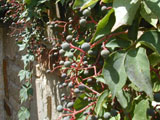
We're not sure that "controlled growth" is an appropriate or even achievable goal for the culture of Parthenocissus quinquefolia (Virginia creeper). Here in Texas, it is pulled up and vilified by a lot of people finding it in their gardens. At the Lady Bird Johnson Wildflower Center, we enthusiastically support the use and propagation of native plants in the landscape, but maybe we're not equally supportive of every native plant. This University of Connecticut horticulture website can tell you a little bit more about it on your home turf. Two things you should note about using it in your landscape are, first, the berries are highly toxic and may be fatal if eaten. The birds like them, and don't seem to die, but people shouldn't try it. The second thing is, even in Connecticut, Virginia creeper is considered invasive. With its sucker-like stem ends allowing it to climb up trees, shrubs and structures (and people, if you don't move around fast enough) it is very hard to keep in a designated space. Constant vigilance is the best bet, and don't let it get started up any plant or structure you don't want it in. Those suckers really hang on, and can leave marks on walls or fences if you do manage to pull the vine off.
More Pruning Questions
Pruning live oak shoots from San Antonio
September 10, 2011 - I am new to TX and am curious about removing suckers/water sprouts from my Live Oaks. Everything I've read about pruning Live Oaks states that you must paint ALL cuts, so I assume that all means al...
view the full question and answer
Pruning smoketree in New Jersey
May 29, 2009 - How far from ground level do I prune a relatively young Smoke tree to get the bush effect?
view the full question and answer
Time to cut back Turk's Cap in Austin
January 27, 2011 - I did not find my question answered in the database. My question is: When is the best time to cut back Red Turks Cap? I live in Central Austin.
view the full question and answer
Hurricane damage to pecan tree
November 12, 2008 - The recent hurricane twisted the top out of our pecan tree, leaving a couple still attached but down on the ground. Could we cut all of the damage off and just leave the trunk? Would there be a chan...
view the full question and answer
Time for trimming oaks from Boerne TX
July 03, 2012 - I want to trim a native red oak but am scared to touch it because I dont want to lose it. It is the primary source of shade in our back yard. Also I want to trim the live oaks and am surrounded with O...
view the full question and answer
| Support the Wildflower Center by Donating Online or Becoming a Member today. |