Native Plants

Q. Who is Mr. Smarty Plants?
A: There are those who suspect Wildflower Center volunteers are the culpable and capable culprits. Yet, others think staff members play some, albeit small, role. You can torture us with your plant questions, but we will never reveal the Green Guru's secret identity.

Did you know you can access the Native Plant Information Network with your web-enabled smartphone?

Ask Mr. Smarty Plants
Ask Mr. Smarty Plants is a free service provided by the staff and volunteers at the Lady Bird Johnson Wildflower Center.

rate this answer

Thursday - July 12, 2007
From: Austin, TX
Region: Southwest
Topic: Propagation
Title: Tiger lilies for Austin
Answered by: Nan Hampton and Barbara Medford
QUESTION:
My dear friend absolutely loves tiger lilies, and I would love to plant some for her, but I wonder if the short winters here in Austin, TX make growing these difficult.. I know little of growing flowers, but I would love to make this happen for her... ANY advice you can give me is valued advice because I know so little about growing or planting flowers here... Thanks..ANSWER:
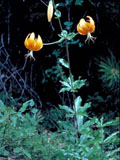
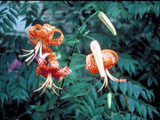
What a wonderful friend you are! We don't know of a nicer gift than a garden.There are three North American native species that are called "tiger lilies": The first is the Columbia or tiger lily (Lilium colombianum) with a range of California and the Northwest. The second is the Sierra tiger lily (Lilium parvum) with a range of California, Oregon, and Nevada. Finally, although not commonly called "tiger lily", is the Carolina lily (Lilium michauxii), which looks very similar to the first two above and is native to eastern Texas.
Lilium lancifolium is a non-native, Asiatic species called tiger lily that also looks very similar to the ones above.
Your best bet for growing tiger lilies in Austin is to pick the the species (Lilium michauxii) that is native to Texas. The area of Texas where it grows is only slightly north of Austin so the length of winter will not likely be a problem. The soil type, however, is very different in Central Texas compared to East Texas. Our heavy black clay or caliche soils (sometimes known in other parts of the country as "rocks") will need to be lightened considerably with sand and/or organic matter to make the tiger lilies happy. The bulbs should be planted in the fall. They will require very little, if any, fertilizer; but will require some moisture. The plants do well in full sun or part shade.
The Texas native Carolina lily is found deep in the woods of East Texas. We would suggest you go to our National Suppliers List to find a source for the bulbs.

More Propagation Questions
Bluebonnet rosettes in July from Austin
July 30, 2012 - Dear Mr S.P.:
Please solve my bluebonnet summer mystery!
I established about 1500 sq feet of bluebonnets starting four years ago by scavenging seeds here and there and just scattering in the sprin...
view the full question and answer
How to grow milkweeds (Asclepias spp.) for monarch butterflies
March 31, 2010 - I tried and tried and tried to grow Asclepias viridis, A. asperula and even A. oenotheroides from seeds and even tubers for fourteen years! Do you have advice for growing these and other milkweed plan...
view the full question and answer
Best place for picking wildflowers in Austin
February 14, 2014 - Where is the best place to find wildflowers for picking near or in Austin around the end of March?
view the full question and answer
Cultural requirements for Heliotropium angiospermum in Florida
April 10, 2006 - What are the cultural requirements for Heliotropium angiospermum?
view the full question and answer
White flowering mountain laurel from Driftwood TX
August 23, 2012 - I love white flowering mountain laurel (Sophora secundiflora) and want to grow one from seeds. I've had a lot of success germinating and growing purple mountain laurel from seeds (or beans), so I DO ...
view the full question and answer
| Support the Wildflower Center by Donating Online or Becoming a Member today. |