Native Plants

Q. Who is Mr. Smarty Plants?
A: There are those who suspect Wildflower Center volunteers are the culpable and capable culprits. Yet, others think staff members play some, albeit small, role. You can torture us with your plant questions, but we will never reveal the Green Guru's secret identity.
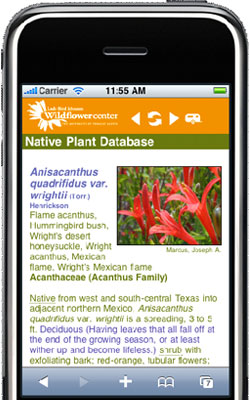
Did you know you can access the Native Plant Information Network with your web-enabled smartphone?

Ask Mr. Smarty Plants
Ask Mr. Smarty Plants is a free service provided by the staff and volunteers at the Lady Bird Johnson Wildflower Center.

rate this answer

Sunday - April 22, 2007
From: Lago Vista, TX
Region: Southwest
Topic: Water Gardens, Herbs/Forbs
Title: Companion plants for irises
Answered by: Nan Hampton
QUESTION:
Hello...what do you suggest as a companion plant for irises? I live in the Texas Hill Country. Thanks.ANSWER:
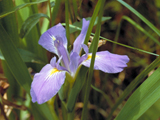
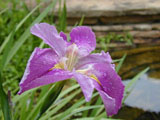
There are several of possibilities for companion plants for your iris, depending on whether they are growing in a flower bed or growing in a wet boggy area. Many native irises [e.g., Iris brevicaulis (zigzag iris) and Iris fulva (copper iris)] grow in marshy areas in the wild, but they also adapt to growing in traditional garden flower beds.
First, here are some suggestions for plants with contrasting color and foliage for a regular well-drained (but with moist soil) flowerbed:
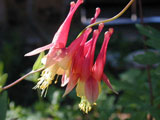
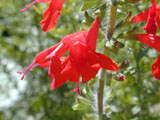
Aquilegia canadensis (red columbine)
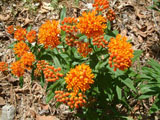
Asclepias tuberosa (butterfly milkweed)
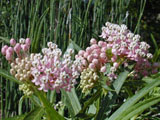
Asclepias incarnata (swamp milkweed)
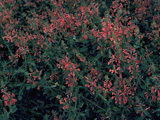
Stachys coccinea (scarlet hedgenettle)
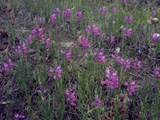
Physostegia intermedia (slender false dragonhead)
If your irises are growing in a semi-aquatic or aquatic area, then here are other suggestions:
Marsilea macropoda (bigfoot waterclover)
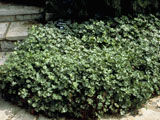
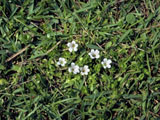
Bacopa monnieri (herb of grace)
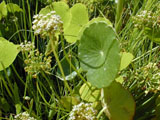
Hydrocotyle umbellata (manyflower marshpennywort)
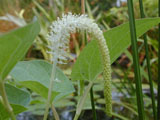
Saururus cernuus (lizard's tail)
Pontederia cordata (pickerelweed)

More Herbs/Forbs Questions
Mystic Spires salvia in transplant shock
July 04, 2008 - Hello. I live in Taylor, Tx. Just outside Austin, Texas. I recently planted mystic spires. One gallons and will receive the hot afternoon sun. All the research says they can tolerate this location. Th...
view the full question and answer
Plants under an oak tree from Corpus Christi TX
June 30, 2012 - My project: To grow white turk's cap under an old oak tree
I first planted St. Augustine sod this spring because we had many oak suckers around the tree. We mixed new soil and compost, and laid the ...
view the full question and answer
Apples, pears and geraniums in Kipling, Saskatchewan
March 30, 2013 - My geranium's leaves became yellow - Why? Where can I buy a good nice apple tree? Will apples and pears grow in south Saskatchewan?
view the full question and answer
Care for Blackfoot daisy?
June 05, 2009 - Hi,
I have two blackfoot daisies and one has died. I've planted them in full sun on a well drained slope. Do these ususally die after blooming? Should I cut the other one back?
Thanks.
view the full question and answer
Erosion controlling plants for a shady Minnesota lakeside
August 11, 2015 - I live about 50 yards from a lake and there is a steep embankment. Recently someone decided to cut the trees off the embankment and now the dirt is eroding off the embankment as well as off my back ya...
view the full question and answer
| Support the Wildflower Center by Donating Online or Becoming a Member today. |