Native Plants
Q. Who is Mr. Smarty Plants?
A: There are those who suspect Wildflower Center volunteers are the culpable and capable culprits. Yet, others think staff members play some, albeit small, role. You can torture us with your plant questions, but we will never reveal the Green Guru's secret identity.
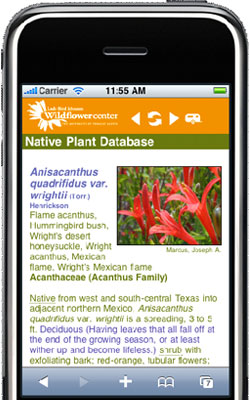
Did you know you can access the Native Plant Information Network with your web-enabled smartphone?

Ask Mr. Smarty Plants
Ask Mr. Smarty Plants is a free service provided by the staff and volunteers at the Lady Bird Johnson Wildflower Center.

rate this answer

Friday - April 20, 2007
From: Austin, TX
Region: Southwest
Topic: Non-Natives
Title: Plant replacements for non-native invasives in Austin, TX
Answered by: Nan Hampton
QUESTION:
I live in Austin, TX, I have a large lot and small house. I want to do some selective planting on the back half of my lot. Currently there are large live oaks, cedar elm. hackberry, cedar, Texas persimmon and non native invasive plants nandinia, lagustrium and chinaberry. I intend to remove the invasive plants and thin the hackberrys and cedar elm that are interfering with the live oaks. Can you give me some suggestions on what to plants use to replace the plants that I remove? This will be in shade to semi-shade with caliche type soil. I want to use plants that support birds and wildlife and would to use plants that I can collect using softwood cuttings. Thanks for any suggestions you can give me.ANSWER:
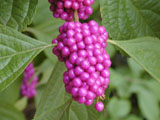
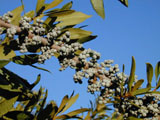
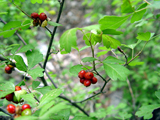
Mr. Smarty Plants commends you for getting rid of those invasive plants in favor of attractive, wildlife-friendly native plants. You have many choices and here are some suggestions:Callicarpa americana (American beautyberry)
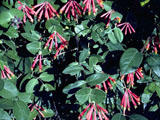
Lonicera sempervirens (trumpet honeysuckle)
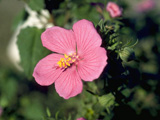
Pavonia lasiopetala (rose pavonia)
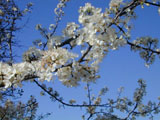
Prunus mexicana (Mexican plum) and Prunus rivularis (creek plum)
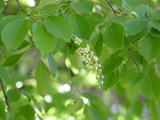
Prunus serotina (black cherry)
Rhus aromatica (fragrant sumac) and Rhus lanceolata (prairie sumac and Rhus virens (evergreen sumac)
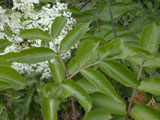
Sambucus nigra ssp. canadensis (common elderberry)
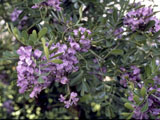
Sophora secundiflora (Texas mountain laurel)
Viburnum rufidulum (rusty blackhaw)
You can do your own search and see more choices by selecting "Hill Country Horticulture" from the Special Collections on our Native Plants Database page and then choosing the "Narrow your search by location, characteristics or growing conditions" option.
More Non-Natives Questions
Bulletproof plants from Burleson TX
April 18, 2013 - I recently wrote you a question concerning planting a privacy plant consisting of wax leaf ligustrum on my country property. Your answer was immediate (thank you-I am impressed). I like the wax leaf ...
view the full question and answer
Clover Among the Bluebonnets in Round Mountain, Texas
April 13, 2012 - I have a beautiful yard of bluebonnets, but mixed in with them are a tall clover that is hiding the flower's beauty and a shorter plant with clover-like leaves that produces burrs. Pulling is not an...
view the full question and answer
Care for non-native Spathiphyllum from Floral Park, NY
December 03, 2010 - I have a medium to large size friendship lily indoor plant that was once magnificent when first purchased it. I lost plenty of lush green leaves to brown spots. The health has improved( I moved locat...
view the full question and answer
Non-native upside down tomatoes in Edmonton AB
September 19, 2010 - Due to early frost, I have brought my upside down tomato plant into the house & have hung it in the basement. What type of grow lamp can I use? I just have the overhead light & standard lamps at my di...
view the full question and answer
Problems with non-native semi-dwarf peach tree
May 03, 2010 - We live in Marana Arizona and have a semi dwarf peach tree, that is only 6 feet tall and is 3 years old. This year we have about 800 small peaches on it and all of the branches and on the ground. We h...
view the full question and answer
| Support the Wildflower Center by Donating Online or Becoming a Member today. |