Native Plants

Q. Who is Mr. Smarty Plants?
A: There are those who suspect Wildflower Center volunteers are the culpable and capable culprits. Yet, others think staff members play some, albeit small, role. You can torture us with your plant questions, but we will never reveal the Green Guru's secret identity.

Did you know you can access the Native Plant Information Network with your web-enabled smartphone?

Ask Mr. Smarty Plants
Ask Mr. Smarty Plants is a free service provided by the staff and volunteers at the Lady Bird Johnson Wildflower Center.

rate this answer

Monday - May 18, 2015
From: Pineville , LA
Region: Southeast
Topic: Planting, Trees
Title: Male and female Ilex decidua ( Possumhaw) trees
Answered by: Nan Hampton
QUESTION:
I was excited to finally find and purchase a male and female possum haw pair via Amazon. (Berry Poppins variety). They were marked male-female and are thriving. But the male has little flowers and the female appears to have the same flowers. Is there a way to determine if these were labeled correctly? Also--when I plant these in my yard this fall can I plant them together in the same hole ?ANSWER:
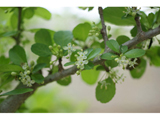
Ilex decidua (Possumhaw) is dioecious—that is, any single tree has either exclusively male (staminate) flowers or only female (pistillate) flowers. Look at the photos of male and female flowers from Archive of Central Texas Plants and Carolina Nature. The flowers themselves look similar; however, the male flowers have stamens with pollen occurring at the tip. Female flowers have sterile stamens without pollen and the ovary becomes enlarged. You will note, however, that the text with the photos from Archive of Central Texas Plants says that sometimes a single possumhaw tree will have both male and female flowers so they are not always strictly dioecious.
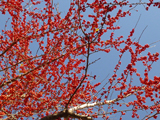
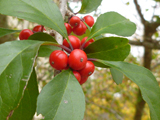
Possumhaws are fertilized by insects so it is not necessary to plant them in the same hole. In fact, it is probably not a good idea since both need an area for their roots to expand to offer the tree the most nutrients and moisture. If you have planted them within 10 to 15 feet from each other, the insects are bound to visit both flowering trees to fertilize the female flowers and produce beautiful red berries.
From the Image Gallery
More Trees Questions
Leaves falling off recently transplanted mature Mountain Laurel
July 05, 2006 - I have recently purchased a Mountain Laurel for my backyard landscaping. It is a fully matured ML standing over 9 feet tall by 6 feet wide. Since it was planted (about 6 weeks ago) it has been losin...
view the full question and answer
Fast-growing tree for Wilmington NC
May 22, 2010 - What kind of fast-growing tree would you plant in Wilmington, NC?
view the full question and answer
Need help diagnosing a problem with Bur Oak in Plano, TX
April 28, 2010 - I planted a bur oak 8 or 9 years ago. It has grown beautifully until this year. When opening, the leaves are very small (a couple inches) and there are lots of seeds (catkins?). I would hate to los...
view the full question and answer
What is the growth rate of the table mountain pine in zone 6 & 7?
July 14, 2009 - How fast growing is the table mountain pine in Zones 6 and 7 in the Appalachians? What is the growth rate?
view the full question and answer
Growing Dwarf Yaupon Holly in Texas
December 04, 2013 - We planted 10 extra dwarf yaupons in our Austin front yard. They were identified as 'Gremici' dwarf yaupon. I googled them to get more information about them in order to determine why five have di...
view the full question and answer
| Support the Wildflower Center by Donating Online or Becoming a Member today. |