Native Plants

Q. Who is Mr. Smarty Plants?
A: There are those who suspect Wildflower Center volunteers are the culpable and capable culprits. Yet, others think staff members play some, albeit small, role. You can torture us with your plant questions, but we will never reveal the Green Guru's secret identity.

Did you know you can access the Native Plant Information Network with your web-enabled smartphone?

Ask Mr. Smarty Plants
Ask Mr. Smarty Plants is a free service provided by the staff and volunteers at the Lady Bird Johnson Wildflower Center.

rate this answer

Monday - March 16, 2015
From: Graham, TX
Region: Southwest
Topic: Plant Identification, Edible Plants, Trees
Title: Identity of wild plum in Childress County, Texas
Answered by: Nan Hampton
QUESTION:
I have a Wild Plum follow up question. My wife grew up around the Childress TX area. She remembers going around the creeks and gathering Wild Plums for her mother as a child. Would you have any idea what type of Wild Plums she found there? She also remembers that they were like in thickets.ANSWER:
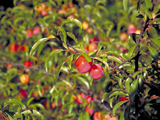
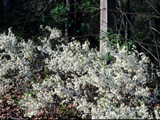
My guess is that it is Prunus angustifolia (Chickasaw plum). This is the only plum species that is shown on the distribution map on the USDA Plants Database as occurring in Childress County. It is described as a "twiggy, thicket-forming tree" that can grow 15-30 feet tall. Here is more information from TAMU Aggie Horticulture and Missouri Botanical Garden.
Another plum species, Prunus gracilis (Oklahoma plum), occurs in adjacent Collingsworth County. It is also thicket-forming but its height as listed as 1.5 to 6 feet. See the USDA Plants Database distribution map. Here is more information TAMU Aggie Horticulture and Oklahoma University Biosurvey.
From the Image Gallery
More Edible Plants Questions
Period to maturity of gooseberries in Bismarck AR
December 29, 2009 - How long does it take to produce gooseberries after planting?
view the full question and answer
Grafting Pecan Trees
July 05, 2013 - I have planted two pecan nuts and now they are about 4 feet tall trees, they have not been grafted but can I graft one of the trees to the other and vice versa and expect pecans from then, they are he...
view the full question and answer
Lists of edible plants in region of Pennsylvania for school project
September 12, 2006 - Please Help! I'm a grade four teacher in Philadelphia. My students and
I are assigned a theme project that involves listing edible plants that
grow in our region. Can you recommend a web site(s)...
view the full question and answer
Edible native salad ingredients
May 28, 2009 - Hi, I'm hoping to make a salad for a school Horticulture project, but I'm having a hard time finding some edible plants. I live in Vermont, and am hoping to find some edible flowers and 'weeds' a...
view the full question and answer
Is the fruit of American Beautyberry (French Mulberry) edible?
March 22, 2012 - I am trying to find out if the "American Beautyberry" or "French Mulberry" fruit is edible? Can you tell me? Your website's information about this plant has been the most informative informatio...
view the full question and answer
| Support the Wildflower Center by Donating Online or Becoming a Member today. |