Native Plants

Q. Who is Mr. Smarty Plants?
A: There are those who suspect Wildflower Center volunteers are the culpable and capable culprits. Yet, others think staff members play some, albeit small, role. You can torture us with your plant questions, but we will never reveal the Green Guru's secret identity.
Did you know you can access the Native Plant Information Network with your web-enabled smartphone?
Ask Mr. Smarty Plants
Ask Mr. Smarty Plants is a free service provided by the staff and volunteers at the Lady Bird Johnson Wildflower Center.

rate this answer

Monday - March 26, 2007
From: Austin, TX
Region: Southwest
Topic: Seed and Plant Sources
Title: Availability of Cornus florida (flowering dogwood) for Central Texas
Answered by: Damon Waitt
QUESTION:
I'd like to buy a flowering dogwood tree. Love the fall berries and spring flowers. I haven't had been able to find them at the nurseries I frequent (Great Outdoors, Natural Gardener, Breed, Barton Springs). Any advice? And please don't try to sell me on the rough leaf. Thanks!ANSWER:
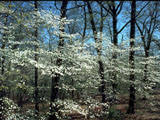
Sometimes considered the most spectacular of the native, flowering trees, Cornus florida (flowering dogwood) is a 20-40 ft., single- or multi-trunked tree with a spreading crown and long-lasting, showy, white and pink spring blooms. Alas, the flowering dogwood makes its home in the eastern deciduous forest which explains why you won't find it at central Texas nurseries. The range of flowering dogwood extends from extreme southwestern Maine west to New York, extreme southern Ontario, central Michigan, central Illinois, and central Missouri; south to extreme southeast Kansas, eastern Oklahoma, east Texas; and east to north Florida. In addition, it prefers partial shade and moist well-drained soil. Best suited to nutrient-rich forest soils, it often becomes stressed when planted in relatively poor urban soil. Cornus drummondii (roughleaf dogwood) on the other hand....


More Seed and Plant Sources Questions
Finding plants to thrive under white pines in Newaygo, MI
May 04, 2009 - Would you please explain why plants do not grow or grow well under white pines or other evergreens? Are there any ground covers that would thrive under a white pine?
view the full question and answer
More on bluebonnets
March 02, 2005 - Where can I find seeds for maroon bluebonnets? I understand that Texas A&M has developed cultivars for this plant in as many as four colors. I haven't been able to find a source for them.
view the full question and answer
Search for non-native Rosa Rugosa for Granbury TX
November 12, 2012 - I would like to find an old fashioned Rosa Rugosa (non-hybrid) to grow in central Texas. I know I've seen them occasionally when traveling in the central TX area. I want them for their rose hips.
...
view the full question and answer
Source for Bumelia lanuginosa in Kansas
August 18, 2007 - Do you know of a source of Bumelia lanuginosa? I would like to include it in a future landscape construction project on the Kansas State University campus.
view the full question and answer
Source of seeds for helianthus salicifolius (Willowleaf sunflower)
February 27, 2008 - Where can I purchase seeds for helianthus salicifolius?
view the full question and answer
| Support the Wildflower Center by Donating Online or Becoming a Member today. |