Native Plants

Q. Who is Mr. Smarty Plants?
A: There are those who suspect Wildflower Center volunteers are the culpable and capable culprits. Yet, others think staff members play some, albeit small, role. You can torture us with your plant questions, but we will never reveal the Green Guru's secret identity.

Did you know you can access the Native Plant Information Network with your web-enabled smartphone?

Ask Mr. Smarty Plants
Ask Mr. Smarty Plants is a free service provided by the staff and volunteers at the Lady Bird Johnson Wildflower Center.

rate this answer

Thursday - January 15, 2015
From: Columbus, TX
Region: Southwest
Topic: Rain Gardens, Planting, Herbs/Forbs, Shrubs
Title: plants for a rain garden's moist area in Central Texas
Answered by: Guy Thompson
QUESTION:
I am looking for local natives to plant in the wet portion of a rain garden/bioswale. Can you help, please?ANSWER:
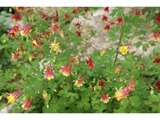
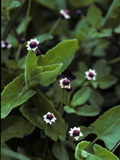
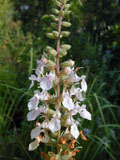
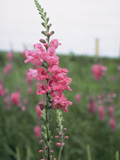
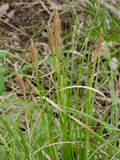
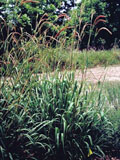
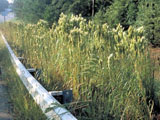
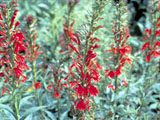
You have a wide choice of native plants suitable for a rain garden. Which ones to choose depends mainly on whether the wet part of your garden remains wet all the time or whether, as in most rain gardens, it dries up part of the time. A good place to select species based on their need for water is a website sponsored by the city of Austin. Listed there are species that require constant water and those that can thrive in dry or wet conditions. Another criterion is plant size. Assuming that you have a relatively small rain garden and need small plants, I suggest a few possibilities that do well in dry or wet soil, beginning with the smallest ones. Hydrocotyle bonariensis (Largeleaf pennywort), Phyla nodiflora (Texas frogfruit), Teucrium canadense (Canada germander), Conoclinium coelestinum (Blue mistflower), Aquilegia canadensis (Eastern red columbine), Physostegia intermedia (Intermediate false dragonhead)Justicia americana (American water-willow), Lobelia cardinalis (Cardinal flower) and Helenium autumnale (Common sneezeweed). Grasses are very important in absorbing water. Consider Muhlenbergia reverchonii (Seep muhly), Andropogon glomeratus (Bushy bluestem), Muhlenbergia capillaris (Gulf muhly), Tripsacum dactyloides (Eastern gamagrass), Panicum virgatum (Switchgrass) and Muhlenbergia lindheimeri (Lindheimer's muhly). For the wetter spots, you could plant sedges, such as Rhynchospora latifolia (Sand-swamp whitetop sedge) and Carex cherokeensis (Cherokee sedge).
Check out your local plant nurseries for the species you decide on. Seeds of some of the plants are also available from Native American Seed. Your best chances for success are to get the plants or seeds in the ground before hot weather arrives. Thank you for your efforts to conserve water.
From the Image Gallery

More Planting Questions
Transplant shock in my Nuttall Oak tree in Moore, OK.
July 23, 2009 - I had a Nutall oak tree planted; it is 5 inches in diameter and about 24 feet tall. It was planted in March of this year, leafed out ok; now since June 20th I have had a large quantity of the leaves t...
view the full question and answer
A Native Tree for Ardmore PA
January 15, 2014 - I am looking to plant a native tree in my back yard. The yard is small and gets mostly afternoon sun. Thank you
view the full question and answer
Removal of burned tree stump from Weir TX
September 24, 2012 - Hello, I am the community manager for Country Glen, LLC In Weir, Texas 5 miles north east of Georgetown Texas.
Simple question I need to remove a large Arizona Ash that was burned buy fire I need th...
view the full question and answer
Need suggestion for a tree with a tap root in Oklahoma City, OK.
October 27, 2012 - I would like to know the best tree to plant in my area that does well. Would like a tap root tree and also a tree that will not mess with my septic lines.
Thank you
view the full question and answer
Fast-growing trees for privacy in East Texas
September 02, 2013 - Fast growing tree seeds for my area to create a tree grove for privacy.
view the full question and answer
| Support the Wildflower Center by Donating Online or Becoming a Member today. |