Native Plants

Q. Who is Mr. Smarty Plants?
A: There are those who suspect Wildflower Center volunteers are the culpable and capable culprits. Yet, others think staff members play some, albeit small, role. You can torture us with your plant questions, but we will never reveal the Green Guru's secret identity.

Did you know you can access the Native Plant Information Network with your web-enabled smartphone?

Ask Mr. Smarty Plants
Ask Mr. Smarty Plants is a free service provided by the staff and volunteers at the Lady Bird Johnson Wildflower Center.

rate this answer

Friday - March 21, 2014
From: Cincinnati, OH
Region: Mid-Atlantic
Topic: Butterfly Gardens, Herbs/Forbs
Title: Natives for wet soil in Cincinnati OH
Answered by: Larry Larson
QUESTION:
I live in Cincinnati and the soil in my back yard is wet (soggy) all year round. There are moss and grass growing in the yard. The area is shaded in the afternoon but receives sun earlier in the day. The soil is clayish and brown/red but there are a few centimeters of organic matter on top. I want to plant native perennials (herbaceous and shrubs) that will survive the wet conditions. Also I would like to plant wildflowers to provide food for bees and butterflies. Could you give me some plant recommendations?ANSWER:
We have a great tool ready to help you with giving suggestions for this type of thing. One of the options on the “Explore Plants” list on the right side of the webpage is “Recommended Species”. If you select the collection for Ohio, that gives you a list of 146 native plants which are native to your state. You can also sort the list for certain characteristics by choosing them in the “Narrow your selection” option on the right hand side.
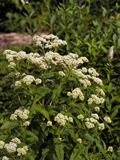
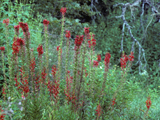
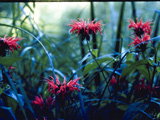
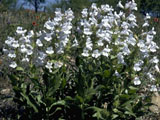
Thinking Wildflowers might be a good demonstration – I selected “Herbs” and “Wet-saturated” as the Soil Moisture. This returned eight wildflowers that really ought to do well in your back yard:
Actaea pachypoda (White baneberry)
Claytonia caroliniana (Carolina springbeauty)
Eutrochium fistulosum (Joe-pye weed) [Birds, Butterflies, Pollenators]
Lobelia cardinalis (Cardinal flower) [Birds, Hummingbirds, Bees]
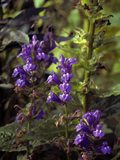
Lobelia siphilitica (Great blue lobelia)
Monarda didyma (Scarlet beebalm) [Hummingbirds, Butterflies, Bees]
Penstemon digitalis (Mississippi penstemon) [Hummingbirds, Bumblebees]
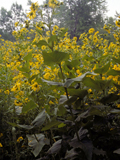
Silphium perfoliatum (Cup plant) [Butterflies, Hummingbirds]
I noted where several of these are also listed as good butterfly or bee attractants within the plant record. Similar efforts can give you suggestions for shrubs, trees or groundcovers – and you can get more options if you think a plant which is good at thriving in soils that are merely moist may apply to your yard.
From the Image Gallery
More Herbs/Forbs Questions
Information about Cedar Sage from Austin
March 11, 2011 - I am new to the Austin area and was wondering about cedar sage (salvia roemeriana). Is this plant considered aromatic, non-aromatic of chia? And, other than the edible flower are other parts of the ...
view the full question and answer
Mexican sage bushes in Mokena IL
July 12, 2010 - I have two Mexican sage bushes; can they be planted in Illinois and survive the winter?
view the full question and answer
Prairie and wetland restoration in Nebraska
July 20, 2007 - We recently bought property south of Crawford,NE near the Pine Ridge area. It has been grazed by horses for years. We'd like to restore the native grasses and flowers. I have no idea where to begi...
view the full question and answer
plants for a rain garden's moist area in Central Texas
January 15, 2015 - I am looking for local natives to plant in the wet portion of a rain garden/bioswale. Can you help, please?
view the full question and answer
Native Plants for a Shaded Patio Container in Missouri
April 17, 2015 - What kind of native plants would grow well in a pot on a fully shaded patio? I live in Kansas City, Missouri. The patio faces north and doesn't get any direct sunlight, but it gets lots of indirect...
view the full question and answer
| Support the Wildflower Center by Donating Online or Becoming a Member today. |