Native Plants

Plant Database
Search for native plants by scientific name, common name or family. If you are not sure what you are looking for, try the Combination Search or our Recommended Species lists.
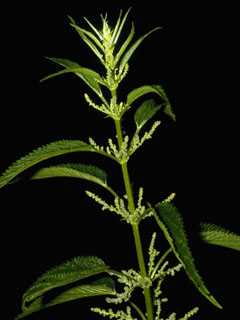
Bruso, George H.
Urtica dioica
Urtica dioica L.
Stinging Nettle
Urticaceae (Nettle Family)
Synonym(s):
USDA Symbol: urdi
USDA Native Status: L48 (NI), AK (NI), CAN (NI), GL (I), SPM (NI)
This species includes subspecies that are North American natives. However, it also includes subspecies that are not native to North America, e.g. Urtica dioica ssp. dioica, Stinging Nettle. Non-native taxa are not treated in this database.
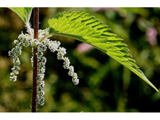
A 4-angled stem, covered with many bristly, stinging hairs, has slender, branching, feathery clusters of minute greenish flowers in the leaf axils. Flowers are unisexual, with either male or female on a given plant, or on same plant with males in upper leaf axils, females lower.
Highly irritating to the skin, this Nettle should not be handled. However, the very young shoots and top leaves may be cooked and served as greens or used in soups and stews. The family and genus names come from the Latin uro ("I burn").
Plant Characteristics
Duration: PerennialHabit: Herb
Leaf Complexity: Simple
Fruit Type: Achene
Size Notes: Up to about 10 feet tall.
Bloom Information
Bloom Color: Green , BrownBloom Time: May , Jun , Jul , Aug , Sep
Distribution
USA: AK , AL , AZ , CA , CO , CT , DC , DE , FL , GA , IA , ID , IL , IN , KS , KY , LA , MA , MD , ME , MI , MN , MO , MS , MT , NC , ND , NE , NH , NJ , NM , NV , NY , OH , OK , OR , PA , RI , SD , TN , TX , UT , VA , VT , WA , WI , WV , WYCanada: AB , BC , MB , NB , NL , NS , NT , ON , PE , QC , SK , YT
Native Distribution: Throughout most of North America.
Native Habitat: Waste places, roadsides.
Growing Conditions
Light Requirement: Sun , Part Shade , ShadeSoil Moisture: Moist
Benefit
Use Food: EDIBLE PARTS: Young shoots. Only collect young shoots from areas you know have NOT been treated with pesticides. Collect the young shoots in the spring. Wear gloves while collecting shoots. PREPARATION: Soak young shoots in warm water to remove dirt and debris. Do not use dish detergent or any type of sanitizer. Place young shoots in boiling, salted water (with a pair of kitchen tongs) and boil for five minutes. Serve as a vegetable or add to soups. The stinging quality disappears after cooking. (Poisonous Plants of N.C.)Warning: POISONOUS PARTS: Stinging hairs on stems and leaves. Minor skin irritation when handled. Symptoms include intense burning and itching sensation lasting a few minutes. Toxic Principle: Mixture of chemicals, not well understood.
Attracts: Butterflies
Larval Host: Question Mark, Milbert's Tortoiseshell, Red Admiral.
Butterflies and Moths of North America (BAMONA)
|
Red Admiral (Vanessa atalanta) 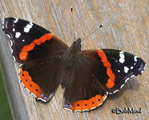 Larval Host |
Question Mark (Polygonia interrogationis) 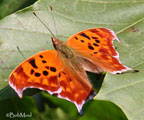 Larval Host |
Find Seed or Plants
Find seed sources for this species at the Native Seed Network.
View propagation protocol from Native Plants Network.
National Wetland Indicator Status
| Region: | AGCP | AK | AW | CB | EMP | GP | HI | MW | NCNE | WMVE |
| Status: | FAC | FACU | FAC | FACU | FAC | FACW | FAC | FAC |
From the National Organizations Directory
According to the species list provided by Affiliate Organizations, this plant is on display at the following locations:Native Seed Network - Corvallis, OR
Bibliography
Bibref 1186 - Field Guide to Moths of Eastern North America (2005) Covell, C.V., Jr.Bibref 1185 - Field Guide to Western Butterflies (Peterson Field Guides) (1999) Opler, P.A. and A.B. Wright
Bibref 663 - Poisonous Plants of North Carolina (1994) Vondracek, W. ; L. Van Asch
Search More Titles in Bibliography
Web Reference
Webref 30 - Calflora (2018) CalfloraWebref 38 - Flora of North America (2019) Missouri Botanical Garden, St. Louis, MO & Harvard University Herbaria, Cambridge, MA.
Webref 23 - Southwest Environmental Information Network (2009) SEINet - Arizona Chapter
Additional resources
USDA: Find Urtica dioica in USDA PlantsFNA: Find Urtica dioica in the Flora of North America (if available)
Google: Search Google for Urtica dioica
Metadata
Record Modified: 2023-05-23Research By: TWC Staff