Native Plants

Plant Database
Search for native plants by scientific name, common name or family. If you are not sure what you are looking for, try the Combination Search or our Recommended Species lists.
Marcus, Joseph A.
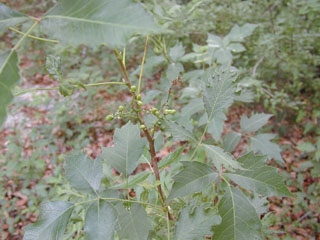
Toxicodendron radicans
Toxicodendron radicans (L.) Kuntze
Eastern Poison Ivy, Poison Ivy
Anacardiaceae (Sumac Family)
Synonym(s):
USDA Symbol: tora2
USDA Native Status: L48 (N), CAN (N)
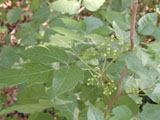
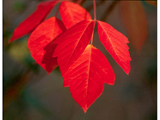
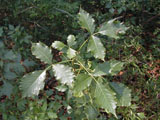
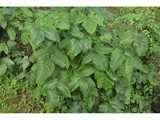
Upright, climbing, or trailing shrub that bears small yellowish-white flower clusters; old stems, covered with fibrous roots, look hairy. Poison Ivy is extremely variable in form, occurring as a ground cover along roadsides, an erect shrub (especially in sandy coastal areas), or a large vine on trees. Red fall foliage is especially conspicuous.
Plant Characteristics
Duration: PerennialHabit: Shrub , Vine
Leaf Retention: Deciduous
Leaf Arrangement: Alternate
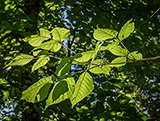
Leaf Complexity: Trifoliate
Leaf Shape: Ovate
Leaf Margin: Dentate
Breeding System: Flowers Unisexual , Monoecious
Fruit Type: Drupe
Size Notes: Up to about 18 inches tall on forest floor. Up to about 5 feet tall when shrub-like. Up to about 100 feet long as a vine.
Autumn Foliage: yes
Fruit: Amber 1/4 inch diameter.
Bloom Information
Bloom Color: White , Green , BrownBloom Time: Feb , Mar , Apr , May , Jun
Distribution
USA: AL , AR , AZ , CT , DC , DE , FL , GA , IA , IL , IN , KS , KY , LA , MA , MD , ME , MI , MN , MO , MS , NC , NE , NH , NJ , NY , OH , OK , PA , RI , SC , SD , TN , TX , VA , VT , WI , WVCanada: AB , NB , NS , ON , PE , QC
Native Distribution: Throughout the East; Ontario east to Nova Scotia, south to Florida, west to Texas, and north to South Dakota and Minnesota.
Native Habitat: Dry to Moist areas Woodland to Streambed
Growing Conditions
Light Requirement: Part Shade , ShadeSoil Moisture: Moist
Conditions Comments: Beautiful Orange to Deep Red Fall Color
Benefit
Warning: POISONOUS PARTS: All parts, in all seasons if plant sap contacted. Severe skin irritation upon contact. Symptoms include severe skin redness, itching, swelling, and blisters following direct or indirect contact. Toxic Principle: Urushiol.Interesting Foliage: yes
Attracts: Butterflies
Deer Resistant: High
Find Seed or Plants
Find seed sources for this species at the Native Seed Network.
Mr. Smarty Plants says
Removal of bramble under live oaks and replacing with groundcover
September 26, 2007
We have several large live oaks on the front of our 12 acre property in Hockley, Texas. Under and around each oak is an extensive amount of bramble which we would like to remove so that we can enjoy ...
view the full question and answer
National Wetland Indicator Status
| Region: | AGCP | AK | AW | CB | EMP | GP | HI | MW | NCNE | WMVE |
| Status: | FAC | FAC | FAC | FACU | FAC | FAC |
From the National Organizations Directory
According to the species list provided by Affiliate Organizations, this plant is on display at the following locations:Lady Bird Johnson Wildflower Center - Austin, TX
Brackenridge Field Laboratory - Austin, TX
Crosby Arboretum - Picayune, MS
Nueces River Authority - Uvalde, TX
Texas Master Naturalists - Lost Pines Chapter - Bastrop, TX
Native Seed Network - Corvallis, OR
Jacob's Well Natural Area - Wimberley, TX
Bibliography
Bibref 354 - Native & Naturalized Woody Plants of Austin & the Hill Country (1981) Lynch, D.Bibref 663 - Poisonous Plants of North Carolina (1994) Vondracek, W. ; L. Van Asch
Search More Titles in Bibliography
Web Reference
Webref 57 - Atlas of Florida Plants (2020) Institute for Systematic BotanyWebref 23 - Southwest Environmental Information Network (2009) SEINet - Arizona Chapter
From the Archive
Wildflower Newsletter 1985 VOL. 2, NO.3 - Greenhouse Assists Research, Wild color on the Hills, Director's Report, Clearin...Additional resources
USDA: Find Toxicodendron radicans in USDA PlantsFNA: Find Toxicodendron radicans in the Flora of North America (if available)
Google: Search Google for Toxicodendron radicans
Metadata
Record Modified: 2023-05-25Research By: NPC