Native Plants

Plant Database
Search for native plants by scientific name, common name or family. If you are not sure what you are looking for, try the Combination Search or our Recommended Species lists.
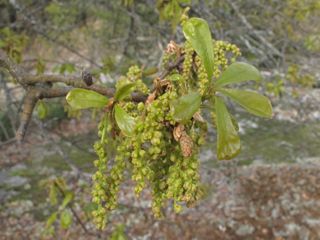
Cressler, Alan
Quercus nigra
Quercus nigra L.
Water Oak, Possum Oak, Duck Oak, Punk Oak, Spotted Oak
Fagaceae (Beech Family)
Synonym(s): Quercus microcarya, Quercus nigra var. heterophylla
USDA Symbol: quni
USDA Native Status: L48 (N)
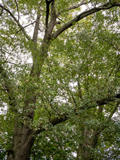
Water oak is a conical to round-topped tree, 50-100 ft. tall, with thick, leathery, leaves that are semi-evergreen in the warmer parts of its range. The shiny, dark-green leaves are wedge-shaped and may have lobes at the tips. Foliage becomes yellow in fall. Tree with conical or rounded crown of slender branches, and fine textured foliage of small leaves.
A handsome, rapidly growing shade tree for moist soils in the Southeast; however, Water Oak is short-lived.
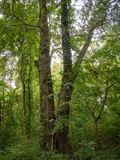
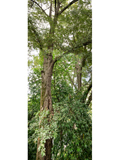

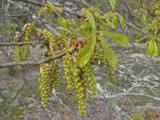
Plant Characteristics
Duration: PerennialHabit: Tree
Leaf Retention: Deciduous
Leaf Arrangement: Alternate
Leaf Complexity: Simple
Leaf Venation: Pinnate
Breeding System: Flowers Unisexual , Monoecious
Inflorescence: Catkin
Fruit Type: Nut
Size Notes: Up to about 100 feet tall.
Leaf: Green
Autumn Foliage: yes
Fruit: Black
Bloom Information
Bloom Color: YellowBloom Time: Mar , Apr , May
Distribution
USA: AL , AR , DC , DE , FL , GA , IL , KY , LA , MD , MO , MS , NC , NJ , OK , SC , TN , TX , VANative Distribution: FL to e. TX, n. to NJ & s. MO
Native Habitat: Moist forests; waterways
Growing Conditions
Water Use: HighLight Requirement: Part Shade
Soil Moisture: Wet
CaCO3 Tolerance: None
Cold Tolerant: yes
Soil Description: Deep, moist, poorly drained soils. Sandy, Sandy Loam, Medium Loam Clay Loam, Clay, Acid-based.
Conditions Comments: Considered a weed tree in some areas, but used effectively as a shade and street tree elsewhere. More weak-wooded and susceptible to wind and ice damage than most oaks. Older trees are susceptible to rot. Susceptibe to oak wilt, often with fatal consequences. Pine-oak rusts and leaf blister are two leaf ailments. Fast-growing.
Benefit
Use Ornamental: Fast growing, Easily transplanted, Shade treeUse Wildlife: Fruit-mammals, Fruit-birds, Nesting site, Substrate-insectivorous birds. Cover.
Attracts: Birds , Butterflies
Larval Host: Horace's Duskywing, White M hairstreak, Northern hairstreak.
Butterflies and Moths of North America (BAMONA)
|
White M Hairstreak (Parrhasius m-album) 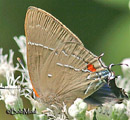 Larval Host |
Propagation
Description: Oaks are most often propagated from seed. No pretreatment is necessary. Plant immediately – outdoors or in deep containers to accomodate long initial taproot. Many oaks require cold temperatures to initiate shoot development. Protect outdoor beds withSeed Collection: Best quality acorns are picked or shaken from the tree. Collect when color has changed to brown. Best if sown immediately as acorns lose viability quickly in storage. Short-term storage in moist, shaded saw dust or sand. Acorns to be sown immediately can be soaked in hot water for 15 min. to prevent weevil infestation. Stored seed should be fumigated with methyl bromide.
Commercially Avail: yes
Find Seed or Plants
View propagation protocol from Native Plants Network.
National Wetland Indicator Status
| Region: | AGCP | AK | AW | CB | EMP | GP | HI | MW | NCNE | WMVE |
| Status: | FAC | FAC | FAC | FACW |
From the National Organizations Directory
According to the species list provided by Affiliate Organizations, this plant is on display at the following locations:Pineywoods Native Plant Center - Nacogdoches, TX
Crosby Arboretum - Picayune, MS
Stengl Biological Research Station - Smithville, TX
Texas Parks and Wildlife Department - Austin, TX
Georgia Native Plant Society - Atlanta, GA
Mt. Cuba Center - Hockessin, DE
Wellspring Organic Farm and Education Center - West Bend, WI
Bibliography
Bibref 766 - Dale Groom's Texas Gardening Guide (2002) Groom, D.Bibref 298 - Field Guide to Texas Trees (1999) Simpson, B.J.
Bibref 355 - Landscaping with Native Plants of Texas and the Southwest (1991) Miller, G. O.
Bibref 841 - Native Alternatives to Invasive Plants (2006) Burrell, C. C.
Bibref 291 - Texas Wildscapes: Gardening for Wildlife (1999) Damude, N. & K.C. Bender
Search More Titles in Bibliography
Additional resources
USDA: Find Quercus nigra in USDA PlantsFNA: Find Quercus nigra in the Flora of North America (if available)
Google: Search Google for Quercus nigra
Metadata
Record Modified: 2017-05-08Research By: TWC Staff