Native Plants

Plant Database
Search for native plants by scientific name, common name or family. If you are not sure what you are looking for, try the Combination Search or our Recommended Species lists.
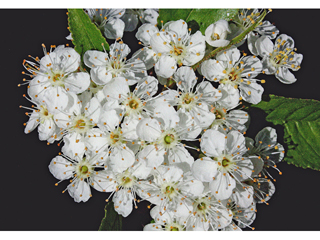
Smith, R.W.
Prunus pensylvanica
Prunus pensylvanica L. f.
Pin Cherry, Fire Cherry, Wild Red Cherry, Bird Cherry, Pigeon Cherry
Rosaceae (Rose Family)
Synonym(s):
USDA Symbol: prpe2
USDA Native Status: L48 (N), CAN (N), SPM (N)
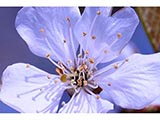
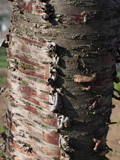
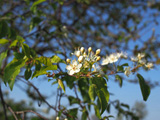
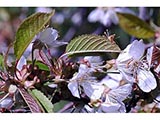
Fire Cherry or Pin Cherry is a slender, sometimes shrubby, tree, 35-50 ft. tall. Fine-textured, bright red branches; reddish to yellow-orange, mature bark; flat-topped clusters of white flowers; and bright red fruit are some of the plant’s attributes. Small tree or shrub with horizontal branches; narrow, rounded, open crown; shiny red twigs; bitter, aromatic bark and foliage; and tiny red cherries. Fall foliage is colorful.
This species is often called "Fire Cherry" because its seedlings come up after forest fires. The plants grow rapidly and can be used for fuel and pulpwood. It is also a "nurse" tree, providing cover and shade for the establishment of seedlings of the next generation of larger hardwoods. The cherries are made into jelly and are also consumed by wildlife.

Plant Characteristics
Duration: PerennialHabit: Tree
Leaf Retention: Deciduous
Fruit Type: Drupe
Size Notes: Up to about 50 feet tall.
Leaf: Green
Autumn Foliage: yes
Fruit: Red
Bloom Information
Bloom Color: WhiteBloom Time: Apr , May , Jun
Distribution
USA: CO , CT , GA , IA , IL , IN , MA , MD , ME , MI , MN , MT , NC , ND , NH , NJ , NY , OH , PA , RI , SD , TN , VA , VT , WI , WV , WYCanada: AB , BC , MB , NB , NL , NS , ON , PE , QC , SK
Native Distribution: Lab. to e. B. C., s. to NJ, SC mts., IL & SD
Native Habitat: Dry to moist clearings; open woods; woodland edges; disturbed areas
Growing Conditions
Water Use: MediumLight Requirement: Sun
Soil Moisture: Dry
Soil pH: Circumneutral (pH 6.8-7.2)
CaCO3 Tolerance: None
Drought Tolerance: High
Soil Description: Rocky or sandy, well-drained soils.
Conditions Comments: Pin cherry grows very rapidly but serves only as a pioneer species, usually disappearing within 20 years unless sites are repeatedly disturbed. Branches break in ice storms.
Benefit
Use Wildlife: Twenty-five species of nongame birds, several upland game birds, fur and game mammals, and small mammals eat pin cherry fruit. Buds are eaten by upland game birds, especially sharp-tailed and ruffed grouse. Foliage and twigs are browsed by deer. However, the foliage has a high calcium to phosphorous ratio which is undesirable for good deer nutrition. Except in dense thickets, pin cherry provides only fair nesting cover and materials for birds. Beavers cut pin cherry and may completely remove small stands . Leaves are poison (hydrocyanic acid) to livestock under certain conditions. However, the toxicity of pin cherry leaves is lower than that of most other cherry species. (USDA Forest Service)Use Food: EDIBLE PARTS: Fruits are used for jelly or syrup. Boil down in water, strain, and add sugar to taste. (Poisonous Plants of N.C.)
Warning: POISONOUS PARTS: Wilted leaves, twigs (stems), seeds. Highly toxic, may be fatal if eaten. Symptoms include gasping, weakness, excitement, pupil dilation, spasms, convulsions, coma, respiratory failure. Toxic Principle: Cyanogenic glycoside, amygdalin.
Conspicuous Flowers: yes
Fragrant Flowers: yes
Attracts: Birds , Butterflies
Larval Host: Columbia silkmoth
Value to Beneficial Insects
Special Value to Native BeesThis information was provided by the Pollinator Program at The Xerces Society for Invertebrate Conservation.
Butterflies and Moths of North America (BAMONA)
|
Columbia silkmoth (Hyalophora columbia) 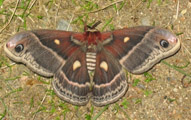 Adult Food Source Larval Host |
Propagation
Description: Prunus species may be rooted from dormant hardwood, softwood, semi-hardwood, or root cuttings. Semi-hardwood and softwood cuttings taken in summer root easiest. Germination of most seeds requires cold stratification. Suckers can be separated from parenSeed Collection: Collect fruit when it is filled out, firm, and its ripe color. Clean seeds from pulp and briefly air dry. (Seeds to be sown immediately in fall do not need drying.) Storage viability is maintained at 31-41 degrees.
Seed Treatment: For spring sowing, stratify seeds in moist sand for 30-60 days in a greenhouse, then cold stratify (36-41 degrees) for 60-90 days. Plant well before high temperatures.
Commercially Avail: yes
Find Seed or Plants
Find seed sources for this species at the Native Seed Network.
View propagation protocol from Native Plants Network.
Mr. Smarty Plants says
Alternatives to non-Texas native pin cherry for Texas
February 28, 2006
Dear Ms. Smarty Plants,
I learned that the fire cherry/ pin cherry is a very hardy tree, and that it is very drought resistant. I live in zone 7, on black land, which becomes very dry in the summer. ...
view the full question and answer
National Wetland Indicator Status
| Region: | AGCP | AK | AW | CB | EMP | GP | HI | MW | NCNE | WMVE |
| Status: | FACU | FACU | FACU | FACU | FACU | FACU | UPL |
From the National Organizations Directory
According to the species list provided by Affiliate Organizations, this plant is on display at the following locations:Native Seed Network - Corvallis, OR
Bibliography
Bibref 1186 - Field Guide to Moths of Eastern North America (2005) Covell, C.V., Jr.Bibref 1185 - Field Guide to Western Butterflies (Peterson Field Guides) (1999) Opler, P.A. and A.B. Wright
Bibref 946 - Gardening with Prairie Plants: How to Create Beautiful Native Landscapes (2002) Wasowski, Sally
Search More Titles in Bibliography
Web Reference
Webref 3 - Flora of North America (2014) Missouri Botanical Garden, St. Louis, MO & Harvard University Herbaria, Cambridge, MA.Webref 23 - Southwest Environmental Information Network (2009) SEINet - Arizona Chapter
Additional resources
USDA: Find Prunus pensylvanica in USDA PlantsFNA: Find Prunus pensylvanica in the Flora of North America (if available)
Google: Search Google for Prunus pensylvanica
Metadata
Record Modified: 2023-05-10Research By: TWC Staff