Native Plants

Plant Database
Search for native plants by scientific name, common name or family. If you are not sure what you are looking for, try the Combination Search or our Recommended Species lists.
Reveal, James L.
Prunus andersonii
Prunus andersonii A. Gray
Desert Peach
Rosaceae (Rose Family)
Synonym(s):
USDA Symbol: pran2
USDA Native Status: L48 (N)
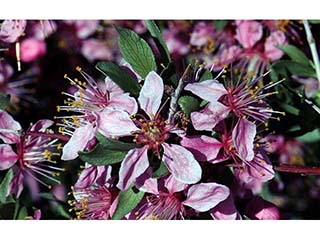
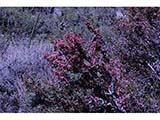
A spreading, deciduous shrub, usually 3-6 ft. tall, with short, stiff, prickly branches. Its best attribute are the rose-colored flowers that occur in showy clusters. These are followed by a brownish fruit.



Plant Characteristics
Duration: PerennialHabit: Shrub
Leaf Retention: Deciduous
Fruit Type: Drupe
Size Notes: Up to about 10 feet tall, often shorter.
Bloom Information
Bloom Color: White , PinkBloom Time: Mar , Apr , May , Jun
Bloom Notes: Usually dark pink, sometimes nearly white.
Distribution
USA: CA , NVNative Distribution: E. slope of Sierras, e. to w. NV
Native Habitat: Dry slopes & mesas from 3500-7500 ft.
Growing Conditions
Light Requirement: SunSoil Moisture: Dry
Soil Description: Dry, well-drained soils.
Value to Beneficial Insects
Special Value to Native BeesThis information was provided by the Pollinator Program at The Xerces Society for Invertebrate Conservation.
Propagation
Description: Prunus species may be rooted from dormant hardwood, softwood, semi-hardwood, or root cuttings. Semi-hardwood and softwood cuttings taken in summer root easiest. Germination of most seeds requires treatment. Some species need a period of after-ripening.Seed Collection: Collect fruit when it is filled out, firm, and its ripe color. Clean seeds from pulp and briefly air dry. (Seeds to be sown immediately in fall do not need drying.) Storage viability is maintained at 31-41 degrees
Seed Treatment: Stratify seeds in moist sand for 30-60 days in a greenhouse, then cold stratify (36-41 degrees) for 60-90 days. Other methods: crack bony endocarp; or soak 2-3 days in water (changing water 1-2 times per day is beneficial) at room temperature, then give
Commercially Avail: yes
Find Seed or Plants
Find seed sources for this species at the Native Seed Network.
From the National Organizations Directory
According to the species list provided by Affiliate Organizations, this plant is on display at the following locations:Native Seed Network - Corvallis, OR
Web Reference
Webref 30 - Calflora (2018) CalfloraWebref 38 - Flora of North America (2019) Missouri Botanical Garden, St. Louis, MO & Harvard University Herbaria, Cambridge, MA.
Webref 23 - Southwest Environmental Information Network (2009) SEINet - Arizona Chapter
Additional resources
USDA: Find Prunus andersonii in USDA PlantsFNA: Find Prunus andersonii in the Flora of North America (if available)
Google: Search Google for Prunus andersonii
Metadata
Record Modified: 2022-10-20Research By: TWC Staff