Native Plants

Plant Database
Search for native plants by scientific name, common name or family. If you are not sure what you are looking for, try the Combination Search or our Recommended Species lists.
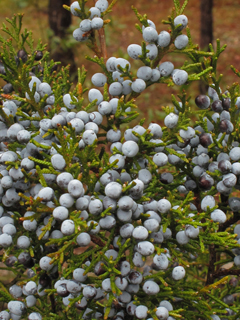
Cressler, Alan
Juniperus virginiana var. silicicola
Juniperus virginiana L. var. silicicola (Small) Silba
Southern Red Cedar, Southern Redcedar, Sand Cedar, Coast Juniper
Cupressaceae (Cypress Family)
Synonym(s): Juniperus barbadensis, Juniperus lucayana, Juniperus silicicola, Juniperus virginiana ssp. silicicola, Sabina silicicola
USDA Symbol: juvis
USDA Native Status: L48 (N)
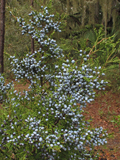
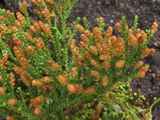
Evergreen aromatic tree with narrow or spreading crown, lower branches drooping; sometimes forming thickets.
This southeastern coastal relative of Eastern Red Cedar (Juniperus virginiana) is distinguished by its often drooping foliage and smaller "berries" and is planted as an ornamental. The wood is similarly used for fenceposts, cedar chests, cabinetwork, and carvings. The Latin name silicola means "growing in sand."
Plant Characteristics
Duration: PerennialHabit: Tree
Leaf Retention: Evergreen
Leaf Complexity: Simple
Fruit Type: Cone
Size Notes: Up to about 30 feet tall.
Leaf: Green
Fruit: Seed cones blue. Though technically incorrect, the seed cones are often referred to as berries.
Bloom Information
Bloom Color: YellowBloom Time: Mar , Apr , May
Distribution
USA: AL , FL , GA , LA , MS , NC , SCNative Distribution: Chiefly near coast, from North Carolina south to Florida and west to SE. Texas; near sea level.
Native Habitat: Stream/river banks, Near lakes or ponds, Swamps, Marshes
Growing Conditions
Water Use: MediumLight Requirement: Part Shade
Soil Moisture: Moist
CaCO3 Tolerance: Medium
Soil Description: Clay, Acid-based.
Benefit
Use Ornamental: AttractiveUse Wildlife: Cover, Nesting site, Seeds-granivorous birds, Seeds-Small mammals.
Attracts: Butterflies
Larval Host: Olive butterfly.
Bibliography
Bibref 298 - Field Guide to Texas Trees (1999) Simpson, B.J.Bibref 1620 - Gardening with Native Plants of the South (Reprint Edition) (2009) Wasowski, S. with A. Wasowski
Bibref 291 - Texas Wildscapes: Gardening for Wildlife (1999) Damude, N. & K.C. Bender
Search More Titles in Bibliography
Web Reference
Webref 3 - Flora of North America (2014) Missouri Botanical Garden, St. Louis, MO & Harvard University Herbaria, Cambridge, MA.Additional resources
USDA: Find Juniperus virginiana var. silicicola in USDA PlantsFNA: Find Juniperus virginiana var. silicicola in the Flora of North America (if available)
Google: Search Google for Juniperus virginiana var. silicicola
Metadata
Record Modified: 2022-10-06Research By: TWC Staff