Native Plants

Plant Database
Search for native plants by scientific name, common name or family. If you are not sure what you are looking for, try the Combination Search or our Recommended Species lists.
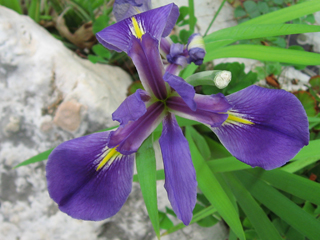
Page, Lee
Iris virginica var. shrevei
Iris virginica L. var. shrevei (Small) E.S. Anderson
Shreve's Iris, Virginia Iris, Southern Blue Flag, Blue Flag
Iridaceae (Iris Family)
Synonym(s): Iris shrevei, Iris versicolor var. blandescens, Iris versicolor var. shrevei
USDA Symbol: irvis
USDA Native Status: L48 (N), CAN (N)
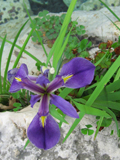
The narrow, sword-shaped leaves of blueflag iris may grow 3 ft. in length. They are erect with a slight, graceful curve. The flowering stalk is occasionally branched and is topped by usually blue-violet flowers resembling those of a cultivated iris.
A member of the iris family (family Iridaceae) which consists of herbs growing from rhizomes, bulbs, or corms, with narrow basal leaves and showy clusters at the tips of long stalks. There are about 60 genera and 1,500 species, distributed in temperate and tropical regions. Among them, Iris, Freesia, Gladiolus, Bugle Lily, and Montbretia are popular ornamentals. Saffron dye is obtained from Crocus, and "essence of violets," used in perfumes, is extracted from the rhizomes of Iris.

Plant Characteristics
Duration: PerennialHabit: Herb
Fruit Type: Capsule
Size Notes: Up to about 3 feet tall.
Bloom Information
Bloom Color: White , Yellow , Blue , Purple , VioletBloom Time: May , Jun , Jul
Distribution
USA: AL , AR , DC , IA , IL , IN , KS , KY , LA , MD , MI , MN , MO , MS , NC , NE , NJ , NY , OH , OK , PA , SC , TN , TX , WI , WVNative Distribution: Ont., w. NY, w. NC & AL, w. to s. MN, s.e. NE, extreme n.e. KS & OK
Native Habitat: Marshes; swamps; meadows
Growing Conditions
Light Requirement: SunSoil Moisture: Wet
Soil Description: Moist to saturated soils.
Conditions Comments: Southern Blue Flag Iris prefers moist, rich soil where it forms colonies. It can also be used in bog or water gardens planted 18-24 inches apart.
Benefit
Use Ornamental: Good cut flowerWarning: Some Iris species are known to be poisonous to humans and animals if eaten (especially the rhizome, or root), and it is likely that all irises contain toxins. Plant juices can cause blisters on the skin. Sensitivity to a toxin varies with a person’s age, weight, physical condition, and individual susceptibility. Children are most vulnerable because of their curiosity and small size. Toxicity can vary in a plant according to season, the plant’s different parts, and its stage of growth; and plants can absorb toxic substances, such as herbicides, pesticides, and pollutants from the water, air, and soil.
Conspicuous Flowers: yes
Deer Resistant: High
Find Seed or Plants
Find seed sources for this species at the Native Seed Network.
From the National Organizations Directory
According to the species list provided by Affiliate Organizations, this plant is on display at the following locations:Lady Bird Johnson Wildflower Center - Austin, TX
Native Seed Network - Corvallis, OR
Bibliography
Bibref 946 - Gardening with Prairie Plants: How to Create Beautiful Native Landscapes (2002) Wasowski, SallyBibref 1294 - The Midwestern Native Garden: Native Alternatives to Nonnative Flowers and Plants An Illustrated Guide (2011) Adelman, Charlotte and Schwartz, Bernard L.
Search More Titles in Bibliography
Web Reference
Webref 38 - Flora of North America (2019) Missouri Botanical Garden, St. Louis, MO & Harvard University Herbaria, Cambridge, MA.Webref 23 - Southwest Environmental Information Network (2009) SEINet - Arizona Chapter
Additional resources
USDA: Find Iris virginica var. shrevei in USDA PlantsFNA: Find Iris virginica var. shrevei in the Flora of North America (if available)
Google: Search Google for Iris virginica var. shrevei
Metadata
Record Modified: 2023-02-14Research By: NPC