Native Plants

Plant Database
Search for native plants by scientific name, common name or family. If you are not sure what you are looking for, try the Combination Search or our Recommended Species lists.
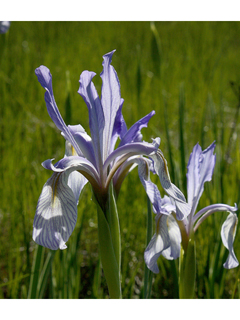
Smith, R.W.
Iris missouriensis
Iris missouriensis Nutt.
Rocky Mountain Iris, Western Blue Flag
Iridaceae (Iris Family)
Synonym(s): Iris longipetala, Iris missouriensis var. arizonica, Iris missouriensis var. pelogonus, Iris pariensis, Iris tolmieana
USDA Symbol: irmi
USDA Native Status: L48 (N), CAN (N)
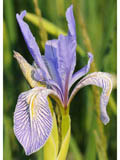
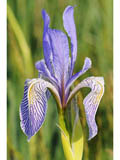
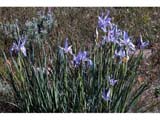
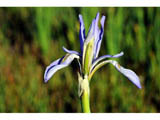
Rocky Mountain iris is slender-stemmed and 1-2 ft. high. One to four flowers occur per stem. The grayish-green leaves are relatively broad. Large, delicate, pale blue to lavender to white flowers, often with purple veins, bloom at the top of stout, leafless (or with 1 short leaf) stalks that grow from dense clumps of flexible, tough, sword-shaped leaves.
This species often forms dense, large patches in low spots in pastures, where the tough leaves are avoided by cattle.
Plant Characteristics
Duration: PerennialHabit: Herb
Fruit Type: Capsule
Size Notes: Up to about 2 feet tall.
Leaf: Green
Bloom Information
Bloom Color: White , Yellow , Blue , PurpleBloom Time: May , Jun , Jul
Distribution
USA: AZ , CA , CO , ID , MN , MT , ND , NE , NM , NV , OR , SD , UT , WA , WYCanada: AB , BC
Native Distribution: B.C. to s. CA (mostly e. of the Cascades), e. to the Dakotas, NM & Mex.
Native Habitat: Marshes; wet meadows; drier areas if moist until flowering time
Growing Conditions
Water Use: HighLight Requirement: Sun
Soil Moisture: Wet
CaCO3 Tolerance: High
Soil Description: Wet soils.
Conditions Comments: This iris spreads to form colonies. It needs to be divided regularly.
Benefit
Use Wildlife: HummingbirdsWarning: POISONOUS PARTS: Rhizomes (thickened roots) and rootstocks, fresh or dry. Minor skin irritation when touched, low toxicity if ingested. Symptoms include nausea, vomiting, abdominal pain, diarrhea, elevated temperature following ingestion; skin irritation upon contact with seeds, rootstock, or cell sap. Toxic Principle: Irisin, iridin, or irisine. (Poisonous Plants of N.C.)
Conspicuous Flowers: yes
Attracts: Hummingbirds
Propagation
Seed Collection: Easily collected from the large capsules.Commercially Avail: yes
Find Seed or Plants
Find seed sources for this species at the Native Seed Network.
View propagation protocol from Native Plants Network.
Mr. Smarty Plants says
Native shade plants around fountain in California
March 18, 2009
Hi, we just put a fountain in our front yard. It is in a mostly shady area. I need to know what plants would go best around the fountain and survive in the shade.
view the full question and answer
National Wetland Indicator Status
| Region: | AGCP | AK | AW | CB | EMP | GP | HI | MW | NCNE | WMVE |
| Status: | FACW | FACW | FACW |
From the National Organizations Directory
According to the species list provided by Affiliate Organizations, this plant is on display at the following locations:Santa Barbara Botanic Garden - Santa Barbara, CA
Tohono Chul Park, Inc. - Tucson, AZ
Native Seed Network - Corvallis, OR
Bibliography
Bibref 946 - Gardening with Prairie Plants: How to Create Beautiful Native Landscapes (2002) Wasowski, SallyBibref 841 - Native Alternatives to Invasive Plants (2006) Burrell, C. C.
Search More Titles in Bibliography
Web Reference
Webref 38 - Flora of North America (2019) Missouri Botanical Garden, St. Louis, MO & Harvard University Herbaria, Cambridge, MA.Webref 23 - Southwest Environmental Information Network (2009) SEINet - Arizona Chapter
Additional resources
USDA: Find Iris missouriensis in USDA PlantsFNA: Find Iris missouriensis in the Flora of North America (if available)
Google: Search Google for Iris missouriensis
Metadata
Record Modified: 2023-02-14Research By: TWC Staff